
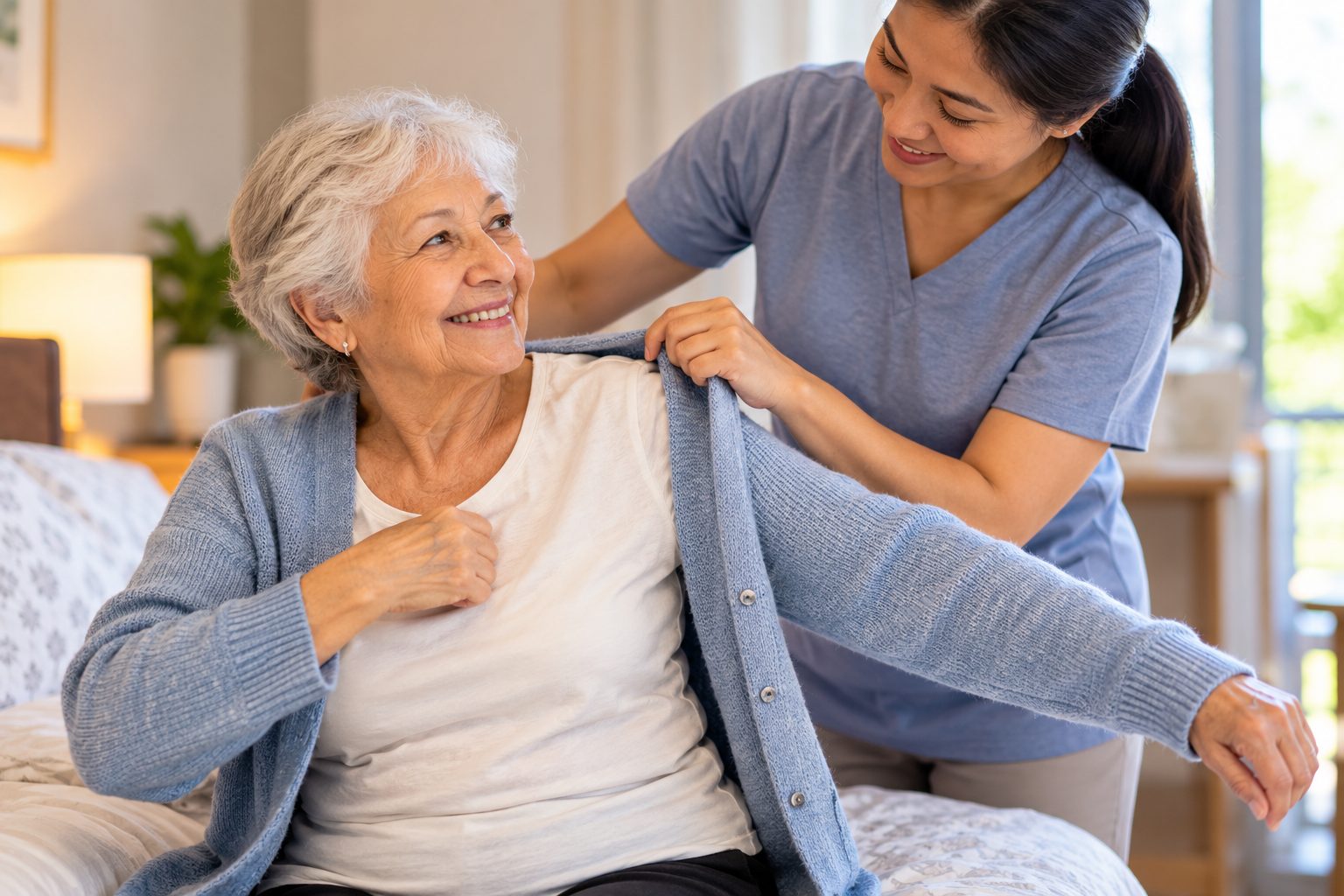
Getting dressed is something most of us do without much thought. But for an older adult living with arthritis, limited mobility, stiffness, or difficulty raising their arms, putting on a shirt or pair of pants can become uncomfortable and exhausting. For someone who needs help dressing, it can also be challenging for the family member or caregiver providing assistance.
Adaptive clothing for seniors is designed to make dressing easier through features such as open-back designs, side openings, accessible fasteners, and carefully placed closures. These features can reduce the movements required to put on or remove clothing, while allowing the wearer to remain comfortable and appropriately covered.
Not everyone needs adaptive clothing. But when ordinary garments make dressing painful, difficult, or unnecessarily time-consuming, the right design can make a meaningful difference.
Looking for adaptive clothing that makes assisted dressing easier? Explore our selected adaptive clothing for women and men.
What is adaptive clothing?
Adaptive clothing is clothing designed or modified to accommodate people who have difficulty dressing in conventional garments.
Instead of requiring someone to pull a shirt over their head, lift both arms, or step into narrow pant legs, certain adaptive garments allow clothing to be opened and fastened in more accessible ways.
For example, an open-back shirt can be placed around a person’s shoulders and secured behind them, while side-opening pants can make dressing easier for someone who has trouble standing or bending.
Adaptive clothing is not limited to older adults. It can also help people living with disabilities, recovering from surgery, or receiving assistance with daily activities.
The important question is not whether a garment is labelled adaptive. It is whether its design addresses the particular difficulty the person experiences.
Types of adaptive clothing and who they may help
Different dressing difficulties call for different solutions. The following comparison can help you identify which designs may be worth considering.
| Type of clothing | How it works | May be helpful for |
|---|---|---|
| Open-back tops and shirts | Open at the back and fasten with snaps or other closures | People who need assistance putting on shirts or have difficulty raising their arms |
| Side-opening pants | Open along part or all of the sides for easier dressing | People with limited standing ability, stiffness, or difficulty stepping into pants |
| Open-back nightgowns | Allow dressing without pulling the garment over the head | People who need assistance changing into sleepwear |
| Magnetic-closure clothing | Uses magnets instead of some traditional buttons | People with reduced finger dexterity, where magnets are medically appropriate |
| Hook-and-loop clothing | Uses easy-to-open fastening strips | People who find buttons, hooks, or zippers difficult |
| Elastic-waist clothing | Reduces the need to manage belts, buttons, or rigid waistbands | People who dress independently but have difficulty with conventional fasteners |
These categories can overlap. For example, an adaptive pair of pants may have both an elastic waistband and side openings.
The best choice depends on the wearer’s mobility, comfort, preferences, and whether they dress independently or with assistance.
Choosing adaptive clothing for different needs
For seniors who have difficulty raising their arms
Pulling a conventional shirt over the head may be uncomfortable for someone with shoulder pain, restricted movement, or upper-body weakness.
An open-back top or shirt may be easier because it can be positioned around the body without requiring the same overhead movement.
When choosing one, look carefully at the placement of the closures. Consider whether the person can manage them independently or whether someone will help.
Also check how the back panels overlap. A well-designed garment should provide appropriate coverage when the wearer is seated or moving.
For seniors who need help putting on pants
Conventional pants often require a person to stand, balance, bend, or lift their legs. Those movements may be difficult for someone with limited mobility.
Side-opening adaptive pants can reduce some of these challenges by allowing the garment to open more widely.
However, not all side-opening pants work the same way. Some have partial openings, while others open farther down the legs.
Before buying, consider whether the person will be dressed while seated, lying down, or standing with assistance. The appropriate design may differ considerably.
For seniors who need assistance with nighttime dressing
Changing into nightwear can be particularly difficult when someone is tired, uncomfortable, or needs help getting ready for bed.
Open-back nightgowns and other adaptive sleepwear may simplify dressing by reducing the need to pull fabric over the head or reposition the body repeatedly.
Comfort is especially important. Look for soft fabrics, suitable coverage, and closures that will not create uncomfortable pressure when lying down.
For seniors who can still dress independently
Not every dressing difficulty requires specialized open-back clothing.
Someone with mild arthritis or reduced hand dexterity may only need garments with larger openings, elastic waistbands, easier fasteners, or fewer buttons.
The goal should be to preserve independence wherever possible, rather than introducing caregiver-assisted clothing when simpler adaptations would work.
What to look for before buying adaptive clothing
1. The specific dressing difficulty
Start by identifying what makes dressing hard.
Is it raising the arms? Bending to reach the feet? Standing long enough to pull on pants? Managing small buttons?
Once you understand the difficulty, it becomes easier to choose a garment with a useful feature instead of purchasing something simply because it is marketed as adaptive.
2. Whether the person dresses independently
This distinction is particularly important.
Some adaptive garments are designed to help people dress themselves. Others are designed primarily for someone receiving assistance.
For example, an open-back garment with closures behind the shoulders may be helpful to a caregiver but impractical for someone dressing alone.
Always check who is expected to operate the closures.
3. Comfort and fabric
Ease of dressing matters, but so does comfort after the garment is on.
Consider fabric softness, breathability, stretch, seams, and how the clothing feels while sitting or lying down.
If the person spends much of the day seated, check whether closures, waistbands, or overlapping fabric could create uncomfortable pressure.
4. Coverage and dignity
Older adults should not have to sacrifice personal style or appropriate coverage simply because they need assistance dressing.
Look for garments that resemble familiar everyday clothing, fit properly, and provide coverage in the positions the wearer commonly uses.
Whenever possible, involve the person who will wear the clothing in choosing colours, styles, and fabrics.
5. Sizing and return policies
Adaptive clothing may fit differently from conventional garments, particularly when the design includes overlapping panels or special openings.
Check the manufacturer’s measurements rather than relying only on a familiar size label.
Before ordering, review the return policy, shipping costs, and any restrictions on returning clothing that has been tried on.
This is especially important when ordering adaptive clothing online in Canada or from a retailer in another country.
Advantages and limitations of adaptive clothing
Adaptive clothing can be genuinely useful, but it is not automatically the best solution for every older adult.
Potential advantages
- May reduce uncomfortable movements during dressing.
- Can make caregiver-assisted dressing more manageable.
- May help people continue wearing familiar-looking everyday clothing.
- Offers alternatives to difficult buttons, narrow openings, and conventional garment designs.
- Can support comfort and personal dignity when properly selected.
Possible limitations
- Specialized garments may cost more than conventional clothing.
- Some designs require caregiver assistance and are not suitable for independent dressing.
- Fasteners and overlapping panels may be uncomfortable if poorly positioned.
- Sizing, fabric selection, and available styles may be limited.
- A garment that works well for one person may not suit another person’s mobility needs.
If dressing has recently become painful or unusually difficult, it may also be worth speaking with an occupational therapist or healthcare professional. They can help identify whether clothing adaptations, dressing aids, or changes to the dressing routine would be useful.
Is adaptive clothing worth buying?
Adaptive clothing is worth considering when a specific design feature makes dressing noticeably easier, more comfortable, or more manageable.
For someone who struggles with small buttons, an inexpensive elastic-waist garment or easy-fastening shirt might be enough.
For someone who needs substantial assistance getting dressed, specially designed open-back clothing or side-opening pants may offer greater practical benefits.
The price alone does not determine value. What matters is whether the garment solves the problem it was purchased to address.
A sensible approach is to start with one garment, assess how well it works during actual dressing, and then decide whether to purchase more.
Where to find adaptive clothing for seniors in Canada
Adaptive clothing is available through specialized online retailers and some stores serving older adults and people with disabilities.
When comparing retailers, look beyond the product photographs. Read the descriptions carefully to understand how the garment opens, where the fasteners are located, and whether it is intended for independent or assisted dressing.
Canadian shoppers should also confirm shipping availability, currency, taxes, and return conditions before placing an order.
At Graceful In Place, we have selected examples of adaptive clothing designed for people who need help dressing, including open-back tops, side-opening pants, and adaptive nightwear.
Explore our selected adaptive clothing products:
Our product showcase includes garments from Ovidis, with descriptions of their adaptive features and links to the manufacturer’s product pages.
Frequently asked questions about adaptive clothing for seniors
What is adaptive clothing for seniors?
Adaptive clothing for seniors is clothing designed to make dressing easier for people with limited mobility, reduced dexterity, pain, or other physical challenges. Features may include open-back designs, accessible fasteners, and side-opening garments.
What are examples of adaptive clothing?
Examples include open-back shirts, side-opening pants, adaptive nightgowns, magnetic-closure shirts, hook-and-loop fasteners, and elastic-waist clothing. Each design addresses a different dressing difficulty.
Who needs adaptive clothing?
Adaptive clothing may benefit older adults with arthritis, reduced mobility, limited hand dexterity, or difficulty dressing independently. It can also help people who receive dressing assistance from family members or professional caregivers.
Is adaptive clothing only for people with disabilities?
No. Adaptive clothing can be useful for anyone who finds conventional clothing difficult or uncomfortable to put on, including older adults recovering from an injury or surgery. The need depends on the person’s abilities rather than a particular diagnosis.
Can seniors put on adaptive clothing by themselves?
Some can. Garments with accessible front closures, elastic waistbands, or simplified fasteners may support independent dressing. Other garments, particularly certain open-back designs, are intended for caregiver-assisted dressing.
What is open-back adaptive clothing?
Open-back adaptive clothing is designed with openings and fasteners at the back, allowing a caregiver to help position the garment without necessarily pulling it over the wearer’s head. Designs vary, so the manufacturer’s dressing instructions should be checked.
Are side-opening pants easier for seniors to wear?
They can be, particularly when stepping into conventional pants, bending, or standing is difficult. Their usefulness depends on how the pants open, the wearer’s mobility, and whether dressing assistance is available.
What is the best adaptive clothing for elderly women?
The best choice depends on the individual’s dressing needs. Open-back tops and nightgowns may be useful for women receiving assistance, while elastic-waist pants or easier fasteners may be better for those who dress independently.
What is the best adaptive clothing for elderly men?
For men who need dressing assistance, open-back shirts and side-opening pants may be useful options. Men who remain independent may prefer conventional-looking garments with simplified closures or more flexible waistbands.
Is adaptive clothing comfortable for wheelchair users?
It can be, but comfort depends on the design and fit. Clothing for someone who spends long periods seated should be checked for waistband pressure, uncomfortable seams, bunching fabric, and closures that press against the body.
Is adaptive clothing more expensive than regular clothing?
Specialized adaptive garments can cost more than conventional clothing because of their construction and fastening features. Prices vary by brand and design. It is worth comparing the garment’s practical benefits with simpler, less expensive alternatives.
Where can I buy adaptive clothing for seniors in Canada?
Canadian shoppers can look at specialized adaptive clothing retailers and online stores that ship to Canada. Before purchasing, confirm sizing, currency, shipping charges, taxes, and return policies.
Making dressing easier without giving up personal choice
Needing help with dressing does not mean a person should lose the ability to choose what they wear.
Clothing is personal. It reflects our preferences, our routines, and how we want to present ourselves to others.
I believe this is something worth remembering when choosing products for an older parent, spouse, or someone in our care. A garment may be practical for the caregiver, but it should also feel comfortable and acceptable to the person wearing it.
The best adaptive clothing respects both needs.
Start with the problem that makes dressing difficult, look for a design that addresses it, and involve the wearer in the decision whenever possible.
Explore our adaptive clothing selection to see examples of open-back shirts, side-opening pants, and nightwear designed to make assisted dressing easier.
Disclosure: Graceful In Place may earn a commission when you purchase through qualifying affiliate links on our product showcase page, at no additional cost to you.