
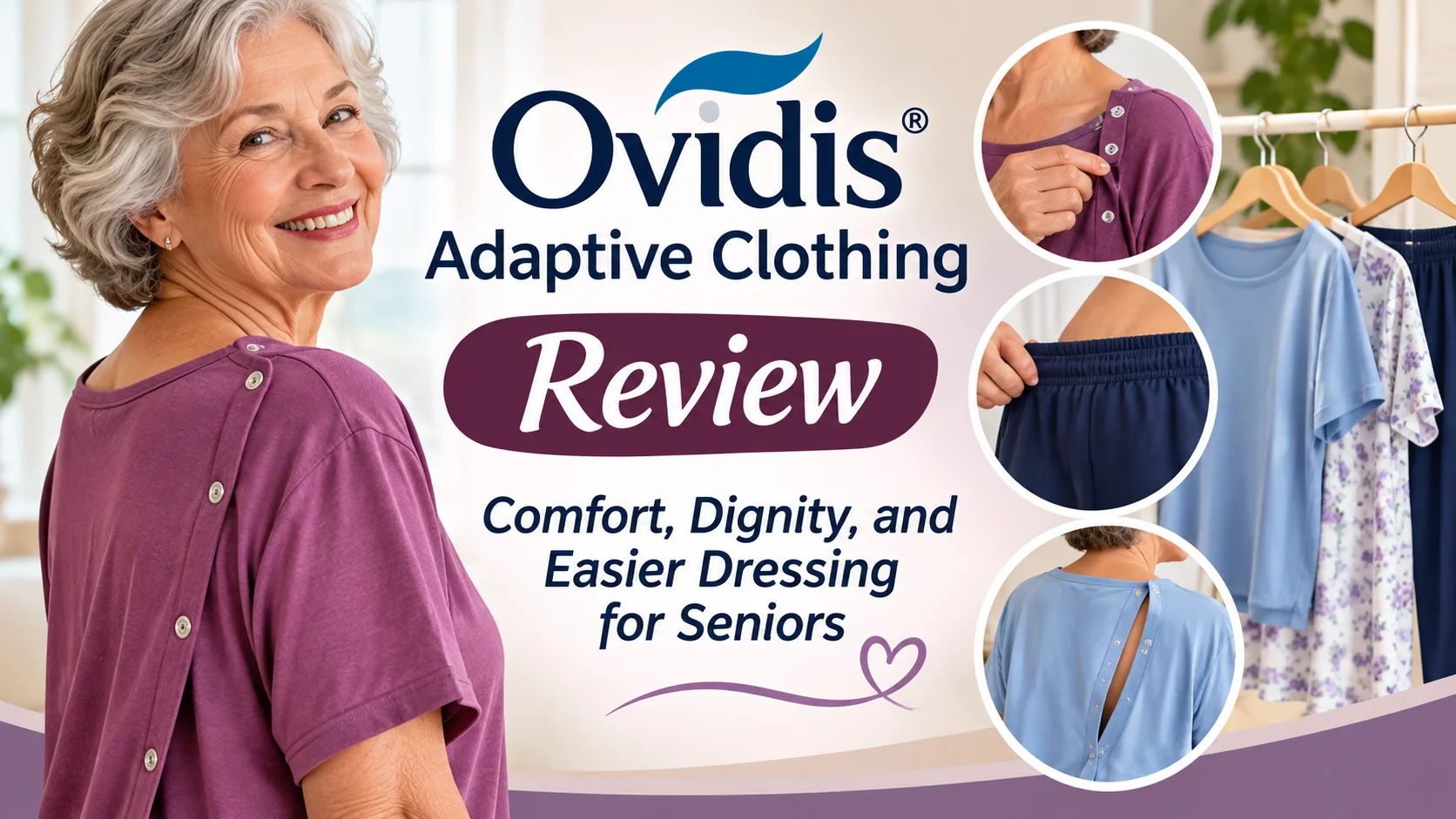
Is Ovidis adaptive clothing worth buying? A detailed review of its adaptive tops, pants, nightgowns, and specialized jumpsuits for easier dressing and caregiving.
Affiliate Disclosure: Graceful In Place may earn a commission when you purchase through links on our website, at no additional cost to you. Our reviews are based on product research, published specifications, customer feedback, and our independent editorial assessment. We have not personally tested every product discussed in this article.
Introduction: The Real Problem Adaptive Clothing Solves
Getting dressed is something many of us take for granted. We choose what to wear, put our arms through the sleeves, fasten a few buttons, and go about our day.
But what happens when those ordinary movements become difficult?
For someone living with arthritis, fastening small buttons can be frustrating. A person recovering from shoulder surgery may struggle to raise an arm. Someone who uses a wheelchair may find that conventional pants are uncomfortable or difficult to manage. And for a family caregiver helping an elderly parent get dressed, even a simple shirt can become challenging.
These difficulties affect more than convenience. Clothing is personal. People want to feel comfortable, look presentable, and have some control over how they dress, even when they need assistance.
This is the problem Ovidis Adaptive Wear is designed to address.
Ovidis offers clothing with specialized openings, accessible fasteners, and designs intended to make dressing easier for people with physical or cognitive limitations and for those who assist them.
But does Ovidis deliver enough practical value to justify choosing it over ordinary clothing?
In this review, Graceful In Place examines Ovidis’s adaptive tops, pants, nightgowns, and anti-strip jumpsuits. We’ll look at how the garments work, what customers report, what they cost, where they may fall short, and who is most likely to benefit.
Our Verdict at a Glance
Ovidis is a strong option for people who need caregiver-assisted dressing and want clothing that looks more like everyday apparel than institutional garments.
Its most useful innovations include full-back openings, strategically placed snaps, accessible pants designs, and specialized jumpsuits for individuals who frequently remove their clothing.
However, Ovidis is not necessarily the best choice for every person with limited mobility. Some garments are designed primarily for assisted dressing rather than independent dressing. Choosing the right garment and size is essential.
What Is Ovidis Adaptive Clothing?
Ovidis is a Canadian adaptive clothing company based in Laval, Quebec. Its clothing is designed primarily for seniors, people with disabilities, individuals requiring assisted dressing, and caregivers.
Unlike ordinary clothing, which assumes the wearer can lift their arms, bend, stand, and manipulate conventional fasteners, adaptive clothing changes the garment’s construction to accommodate different abilities.
Ovidis offers several types of clothing:
- Adaptive tops and shirts with full-back openings and snap closures
- Pants with side openings or back-panel designs
- Open-back nightgowns and adaptive sleepwear
- Adaptive dresses and cardigans
- Specialized anti-strip jumpsuits
- Clothing for both men and women
The company’s emphasis is on combining practical dressing assistance with the appearance of familiar clothing.
That distinction matters. Someone who needs help dressing may still want to wear a colourful blouse, a comfortable polo shirt, or attractive sleepwear rather than clothing that resembles a hospital gown.
What Makes Ovidis Different from Regular Clothing?
The difference is not always obvious from the front.
An Ovidis adaptive top may look like an ordinary blouse, but its back can open completely. A caregiver can position the garment around the person’s shoulders and secure it using snaps without requiring the same movements needed to pull on a conventional shirt.
Similarly, certain adaptive pants are constructed to make dressing or personal care easier when standing, bending, or repositioning is difficult.
These designs can be especially helpful when a person needs assistance from a family member, home-care worker, or nursing-home staff.
What Ovidis Customers Are Saying
Customer feedback is an important part of evaluating adaptive clothing because the practical benefits often become clear only during everyday use.
As checked on November 5, 2026, Ovidis’s official customer reviews page displayed 323 reviews, with approximately 85% receiving five stars.
The company also displayed an overall customer rating of approximately 4.8 out of 5 stars.
These are Ovidis customer ratings, not Graceful In Place’s editorial score. Review totals and averages can change as new feedback is published.
Source: Ovidis Customer Reviews
What Do Customers Praise?
The published reviews include positive comments about clothing quality, appearance, ease of dressing, delivery, and customer service.
One customer described purchasing sleepwear for a father living in long-term care with Alzheimer’s disease. The reviewer reported that personal support workers found the garments helpful during overnight care.
Another customer appreciated the appearance and quality of Ovidis jumpsuits, noting that they did not look like conventional medical clothing.
Several reviews also mention prompt service and satisfaction with the garments’ fabrics.
These experiences are encouraging, particularly because Ovidis is selling products intended to solve practical problems rather than simply offer a different fashion style.
What Concerns Appear in Customer Feedback?
Not every customer has the same experience.
Sizing deserves particular attention. One customer described needing a larger jumpsuit size than initially expected, especially to accommodate incontinence products and make caregiving easier.
The customer praised Ovidis’s exchange assistance but expressed dissatisfaction with the additional return-shipping expense.
This illustrates an important buying consideration: a garment can be well designed yet still be unsuitable if the fit does not provide enough room for movement or assisted dressing.
How Much Weight Should We Give These Reviews?
The positive feedback supports the conclusion that many customers appreciate Ovidis’s products and service.
However, reviews are personal experiences, not controlled studies. They cannot establish exactly how many minutes a garment will save, whether it will reduce physical pain, or how long it will last for every customer.
The best way to use customer reviews is to identify recurring strengths and concerns, then compare those observations with the actual product features.
Ovidis Clothing Reviewed by Everyday Need
Adaptive Tops and Shirts: Easier Upper-Body Dressing
For many people, upper-body dressing becomes difficult because of restricted shoulder movement, arthritis, weakness, or discomfort when lifting the arms.
A conventional shirt often requires the wearer to reach forward, pull fabric over the shoulders, or raise the arms above the head.
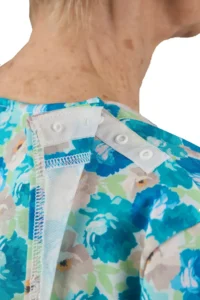
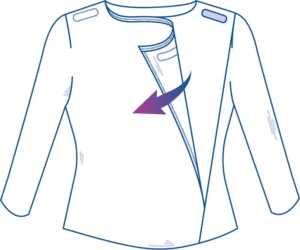
Ovidis addresses this problem with adaptive tops featuring full-back openings and snap closures.
How the design works
Instead of pulling the entire garment over the head, a caregiver can place the top around the person’s upper body and secure the overlapping back panels.
The front resembles an ordinary top, while the accessible construction is largely concealed behind the wearer.
The Cristy Adaptive Top, for example, features a full-back opening, snap closures, and a relaxed design.
Its fabric is a cotton-polyester blend intended to be machine washable and easy to maintain.
Who may benefit?
These tops are worth considering for people who have difficulty raising their arms, experience pain during dressing, or require help from a caregiver.
They may also be useful in long-term care settings, where staff assist residents with dressing each day.
What to consider
An open-back garment is not automatically easier for someone who dresses independently. Depending on the person’s abilities, closures positioned behind the body may still require assistance.
If independent dressing is the main goal, look specifically for front-opening or magnetic-closure designs that the wearer can operate comfortably.
Our assessment: Ovidis adaptive tops are particularly appealing for assisted dressing because they reduce the need for some of the movements required by conventional clothing.
View Cristy Adaptive Top at Ovidis
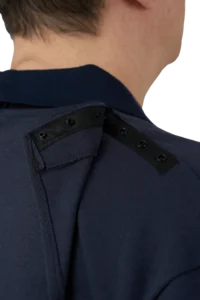
Thomas Adaptive Polo – Navy: A classic polo-style option for men who need assistance dressing.
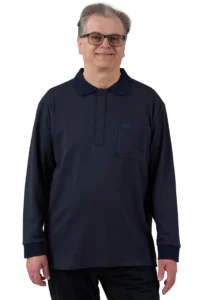
View Thomas Adaptive Polo – Navy at Ovidis
Theo Adaptive Shirt – Navy: A men’s open-back shirt for caregiver-assisted dressing.
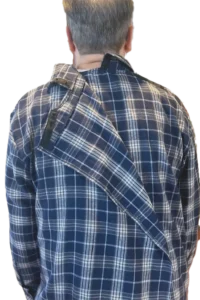
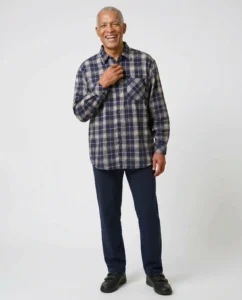
View Theo Adaptive Shirt – Navy at Ovidis
Adaptive Pants: Accessibility and Comfort While Seated
Pants can present a different set of challenges.
For someone with limited standing ability, dressing may involve transferring, shifting body position, or receiving assistance while seated or lying down.
Ordinary pants are not always designed with these situations in mind.
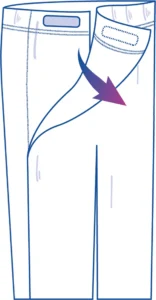
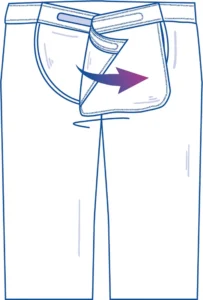
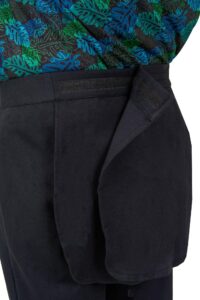
Ovidis offers pants with specialized side openings and back-panel designs intended to make dressing and personal care more manageable.
What makes the pants adaptive?
Depending on the model, the garment may use accessible openings that allow a caregiver to position or adjust the pants without relying entirely on conventional pull-on dressing.
The company’s Arie adaptive pants are one example of its specialized pants range.
These designs may help reduce the amount of movement required during dressing and make certain personal-care tasks more convenient.
Are they useful for wheelchair users?
Potentially, yes.
People who spend substantial time seated may benefit from garments that are easier to put on and adjust.
However, not every adaptive pant design provides independent toilet access, and not every wheelchair user has the same abilities.
A garment that works well for someone receiving caregiver assistance may not work equally well for a person who wants to manage toileting independently.
Before purchasing, examine the location of the openings, the closure system, and whether the garment is intended for assisted or independent use.
Comfort matters as much as accessibility
The ability to open or fasten a garment is only one part of its usefulness.
Waistband pressure, fabric stretch, seam placement, and fit can all affect comfort, particularly when someone remains seated for extended periods.
Ovidis offers several designs, so customers should compare the actual construction rather than assume that every pair of adaptive pants provides the same benefits.
Our assessment: Adaptive pants can be among the most practical purchases for someone who needs regular dressing assistance, but selecting the correct design is essential.
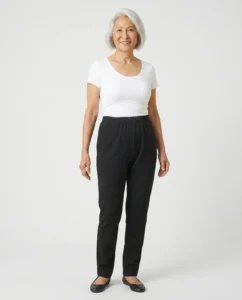
View Arie Adaptive Pants at Ovidis
Jack Adaptive Pants – Black: Adaptive pants for men who need help dressing, particularly while seated.
View Jack Adaptive Pants – Black at Ovidis
Adaptive Nightgowns: Easier Bedside and Overnight Care
Nighttime dressing can be particularly difficult when a person has limited mobility or spends much of the day in bed.
Changing into sleepwear may require turning, repositioning, or raising the arms.
For caregivers, conventional nightgowns can also make certain personal-care tasks more complicated.
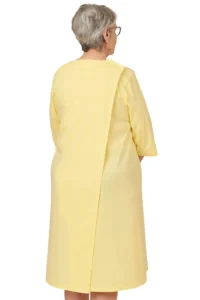
Ovidis offers adaptive nightgowns with openings intended to make assisted dressing easier.
The Olivia adaptive nightgown
The Olivia is part of Ovidis’s women’s adaptive sleepwear collection.
It is designed for people who need help getting dressed and for caregivers who want easier access during routine care.
The advantage of this type of garment is that it can resemble familiar sleepwear while incorporating a more accessible construction.

Why this matters for dignity
People receiving personal care may feel uncomfortable when clothing has to be removed repeatedly.
An appropriately designed adaptive nightgown may make care routines easier while helping the wearer remain more comfortably covered.
The actual benefit depends on the garment design, the person’s mobility, and the type of assistance required.
Is an adaptive nightgown better than a hospital gown?
For everyday home use, many people may prefer adaptive sleepwear that looks and feels more like ordinary clothing.
However, hospital gowns and medical garments have their own purposes, particularly when frequent clinical access is required.
An adaptive nightgown is not a substitute for medical clothing when a healthcare professional recommends something specific.
Our assessment: Ovidis nightgowns are a practical option for home caregivers and long-term care residents who need assistance with dressing and nighttime routines.
View Olivia Adaptive Nightgown at Ovidis
Anti-Strip Jumpsuits: Specialized Clothing for Dementia Care
One of Ovidis’s more distinctive product categories is its anti-strip jumpsuit collection.
These garments are intended for people who repeatedly remove their clothing, including some individuals living with dementia or other cognitive conditions.
Frequent undressing can create practical difficulties for caregivers, especially when it occurs during the night or in shared care environments.
How anti-strip jumpsuits work
Ovidis offers jumpsuits with specially positioned closures that are less accessible to the wearer but can be opened by a caregiver.
The Carrie jumpsuit, for example, uses a design incorporating back and between-the-leg zippers.
The intention is to make routine care possible while discouraging unwanted removal of the garment.
Why these garments may be useful
For certain individuals, repeatedly removing clothing can create hygiene concerns, expose the person to discomfort, or make care routines more difficult.
A specialized garment may help caregivers manage those situations more consistently.
However, the suitability of anti-strip clothing depends on the individual.
It should not be used simply to restrict someone for convenience. Comfort, dignity, safety, and the person’s care needs must remain central to the decision.
What anti-strip clothing cannot do
An anti-strip jumpsuit does not prevent wandering, treat dementia, or eliminate every behavioural concern.
It is a clothing adaptation designed for a particular dressing and care problem.
Families should discuss persistent undressing behaviour with the person’s healthcare or care team, especially if it may reflect discomfort, pain, temperature, or an unmet need.
Our assessment: This specialized category helps distinguish Ovidis from ordinary clothing retailers, but it requires careful, individual selection.
What Customers Appear to Value Most
Looking across Ovidis’s product designs and published feedback, several themes stand out.
Easier Caregiver-Assisted Dressing
This is perhaps Ovidis’s clearest strength.
Full-back openings, snaps, and accessible garment panels are intended to make it easier to dress someone who cannot comfortably perform conventional dressing movements.
The benefit is especially relevant when the wearer relies on another person for daily assistance.
Clothing That Looks Familiar
Adaptive clothing does not have to look institutional.
Ovidis offers ordinary-looking tops, pants, nightgowns, dresses, and other garments in different colours and prints.
For people who care about their appearance, this can be an important advantage.
Specialized Choices for Different Needs
A person recovering from surgery may need something quite different from a long-term care resident who requires extensive dressing assistance.
Ovidis’s range includes multiple designs rather than treating every mobility limitation as the same problem.
Machine-Washable Fabrics
Easy maintenance matters when clothing is worn frequently or used in caregiving situations.
Many Ovidis garments are designed for machine washing, although care instructions should always be checked for the individual item.
Customer Service
Several published reviews describe positive experiences with ordering, delivery, and assistance.
There are also comments about sizing and return costs, which are useful reminders that the overall buying experience depends on more than garment quality.
Common Concerns and Limitations
No adaptive clothing brand is right for everyone.
Here are the main considerations we would examine before recommending Ovidis.
Higher Prices Than Some Ordinary Clothing
Adaptive clothing incorporates specialized construction, and some garments cost more than basic conventional alternatives.
Whether the additional cost is worthwhile depends on how much practical benefit the adaptive features provide.
For someone who struggles with dressing every day, the value may be considerable.
For someone who can dress comfortably in ordinary clothing, the extra features may offer little advantage.
Sizing Requires Care
Adaptive clothing needs to accommodate the person’s body, movement limitations, and dressing routine.
Some customers may need extra room for seated comfort, caregiver handling, or incontinence products.
Ovidis advises customers who fall between sizes to consider the larger size for easier dressing.
Sizes vary by garment. Customers should check each product’s size chart rather than assume all Ovidis clothing fits identically.
Some Designs Require Caregiver Assistance
This is an important distinction.
A full-back opening can make a garment easier for a caregiver to put on someone, but it may be difficult for the wearer to fasten independently.
If your main goal is dressing without assistance, choose a garment designed specifically for that purpose.
Closures Need to Suit the Wearer
Ovidis uses different closure systems across its collection, including snaps, zippers, and other accessible fasteners.
A closure that works well for one person may be difficult for another.
People with limited hand strength, tremors, or reduced coordination should consider the exact location and operation of the fasteners.
Durability Depends on Use and Care
Frequent washing and daily use place demands on any garment.
Although Ovidis describes its fabrics as durable and easy to maintain, we did not find independent testing that establishes a guaranteed number of washes or years of use.
Check the fabric composition and care instructions before buying.
Not Every Garment Suits Every Disability
People with severe movement restrictions, complex medical needs, or specialized positioning requirements may need a more individualized clothing solution.
Ovidis offers a useful range, but it is not a universal answer to every dressing challenge.
Who Should Consider Ovidis Adaptive Clothing?
Family Caregivers Helping Elderly Parents
This is one of the strongest potential use cases.
When an elderly parent has difficulty lifting their arms, standing, or managing conventional clothing, adaptive garments may make daily assistance more manageable.
A full-back top or specially designed pair of pants could be worth considering.
Wheelchair Users
Some wheelchair users may benefit from accessible pants, comfortable seated designs, or tops that are easier to put on.
The best choice depends on whether the person dresses independently or receives assistance.
It is especially important to examine the garment’s construction before assuming it will improve toilet access.
People Recovering from Surgery
Temporary movement restrictions can make ordinary clothing difficult.
For example, someone recovering from shoulder surgery may need clothing that avoids certain arm movements.
However, any garment should be compatible with the person’s postoperative instructions.
People Living with Arthritis or Limited Hand Dexterity
Fasteners can become challenging when hand movement is painful or restricted.
Adaptive closures may help, but the wearer should consider whether they can operate the specific fastener without assistance.
Long-Term Care Residents
Ovidis garments may be useful when staff regularly assist residents with dressing, hygiene, or nighttime care.
Easy-care fabrics and familiar clothing styles can also be appealing in these settings.
People Living with Dementia
Certain Ovidis garments are designed for assisted dressing and specialized dementia-care situations.
Anti-strip jumpsuits may be appropriate for selected individuals, but the decision should reflect the person’s comfort, preferences, and care needs.
Who May Not Need Ovidis?
People who can dress comfortably and independently using ordinary clothing may not gain enough benefit from adaptive designs to justify the additional expense.
The goal is not to replace ordinary clothing unnecessarily. It is to find a better solution when ordinary clothing no longer works well.
What Do Professionals and Caregiver Resources Say About Adaptive Clothing?
Adaptive clothing is increasingly discussed in caregiver resources because dressing is an important activity of daily living.
Resources such as A Place for Mom and Graying With Grace discuss clothing adaptations that can make dressing easier for older adults and people who require assistance.
Their guidance commonly emphasizes accessible closures, comfortable construction, and selecting garments according to the person’s actual abilities.
The broader principle is straightforward: clothing should adapt to the person, rather than forcing the person to struggle with clothing that no longer suits their needs.
How Ovidis Fits into This Discussion
Ovidis focuses particularly on caregiver-assisted dressing.
That makes it different from adaptive fashion collections designed primarily for independent wearers who need accessible front closures or other self-dressing features.
Both approaches are valuable, but they solve different problems.
For example, a person with arthritis who dresses independently may prefer a front-opening magnetic shirt.
A person with very limited shoulder movement who receives dressing assistance may benefit more from a full-back opening.
The most important question is not simply whether a garment is labelled adaptive. It is whether its design matches the person’s dressing needs.
Our Assessment of Ovidis’s Position
Ovidis occupies a useful place in the adaptive clothing market by offering garments that combine familiar appearance with specialized caregiver-friendly construction.
Its anti-strip jumpsuits and accessible sleepwear also address needs that are not usually covered by mainstream clothing brands.
That does not make every Ovidis garment superior to every competitor. It means the brand deserves consideration when assisted dressing is the primary concern.
Ovidis Adaptive Clothing Prices in 2026
Price is an important consideration, especially when a person needs several garments for daily use.
Ovidis lists its products in Canadian dollars. Prices vary by style, colour, size, availability, and promotional offers.
Here are representative prices from the company’s catalog at the time of our review.
| Ovidis product | Listed price (CAD) |
|---|---|
| Cristy adaptive top, Navy | $65 |
| Arie adaptive pants | $65 |
| Olivia adaptive nightgown | $65 |
| Theo adaptive shirt | $65 |
| Carrie anti-strip jumpsuit | $80 |
Prices checked in November 2026. Verify current prices and availability before purchasing.
These prices are generally above the cost of some basic everyday garments, although they are not necessarily more expensive than premium conventional clothing.
Is Ovidis Worth the Additional Cost?
That depends on what problem the garment solves.
Suppose a caregiver regularly struggles to help an elderly parent put on a conventional pullover shirt.
If a full-back adaptive top makes that routine more comfortable and manageable, the additional cost may be worthwhile.
Similarly, an accessible pair of pants may offer practical value when conventional pants are difficult to put on or remove.
However, it would be misleading to promise a specific financial return.
We have not found reliable Ovidis-specific research establishing that customers save a particular number of minutes each day or recover their purchase costs within a set period.
The value is better understood in terms of convenience, comfort, dignity, and suitability for daily care.
The Cost of Building a Small Adaptive Wardrobe
A family might begin with one adaptive top, one pair of pants, and one nightgown.
Using the representative prices above, that would cost approximately CAD $195 before applicable taxes or shipping.
Purchasing several garments may be useful when clothing needs frequent washing, but there is no reason to replace an entire wardrobe immediately.
We recommend starting with the garment that addresses the most difficult daily task.
If it works well, additional pieces can be purchased later.
Shipping and Returns
Ovidis advertises free shipping on qualifying orders over CAD $100 before taxes within Canada and the United States.
Its published clothing return policy generally allows returns or exchanges within 30 days of purchase, provided the items are in their original condition with tags attached.
Customers must obtain a return authorization before sending merchandise back.
Return-shipping costs are generally non-refundable, and certain product categories are final sale.
Read the current policy before ordering, particularly when sizing is uncertain.
Quality, Comfort, and Durability
Adaptive clothing must do more than open and close conveniently.
It also needs to feel comfortable, withstand ordinary use, and maintain an acceptable appearance.
Fabric Quality
Ovidis uses different fabrics depending on the garment.
For example, the Cristy adaptive top is available in a cotton-polyester blend designed for machine washing.
Other garments use fabrics chosen for stretch, softness, and everyday care.
The exact composition varies, so customers should review the individual product description.
Comfort During Extended Wear
Comfort can be especially important for people who spend much of the day seated or in bed.
A garment that is easy to put on may still be unsuitable if it creates pressure, restricts movement, or fits poorly.
Customers should pay attention to the waistband, seams, closures, and fabric.
For individuals with sensitive skin or significant positioning needs, a caregiver or healthcare professional may need to help assess suitability.
Snap and Zipper Durability
Specialized fasteners are central to many adaptive designs.
Ovidis’s snap closures and zippers are intended for repeated everyday use, but their long-term performance will depend on the garment and how it is cared for.
We did not identify independent durability tests that establish how many washing cycles each closure will withstand.
For that reason, we would not assign a specific lifespan to Ovidis clothing.
Washing and Maintenance
Many Ovidis garments are machine washable, which is useful for families and care facilities managing frequent laundry.
Always follow the manufacturer’s instructions, particularly for garments with specialized closures.
Our Quality Assessment
Published customer feedback includes positive comments about fabrics, appearance, and construction.
Those observations are encouraging, but they are not a substitute for independent long-term testing.
Our conclusion: Ovidis appears to offer thoughtfully designed clothing with practical construction features. Buyers should evaluate fabric, fit, and fastener placement for the particular garment they are considering.
Ovidis vs. Other Adaptive Clothing Brands
Ovidis is not the only company offering clothing for people with disabilities or dressing challenges.
Other brands take different approaches, and the best choice depends on the wearer’s needs.
Ovidis vs. Silverts
Silverts offers a broad range of adaptive clothing and footwear, including products designed for seniors and people requiring dressing assistance.
Like Ovidis, it offers specialized garment openings and caregiver-friendly designs.
Ovidis may appeal to shoppers who prefer its particular styles, fabrics, or garment construction.
Silverts may be worth comparing when a customer wants a different selection of products or sizing options.
Our recommendation: Compare individual garments rather than assuming one brand is better across every category.
Ovidis vs. Tommy Hilfiger Adaptive
Tommy Hilfiger Adaptive approaches accessibility through a recognizable fashion brand.
Its adaptive collections have included features intended to make clothing easier to wear while maintaining familiar mainstream styles.
Ovidis focuses more directly on assisted dressing and specialized caregiving needs.
Someone seeking fashionable adaptive clothing for independent daily wear may have different priorities from someone purchasing clothes for a parent in long-term care.
Our recommendation: Choose according to dressing ability and garment function, not brand recognition alone.
Ovidis vs. IZ Adaptive
IZ Adaptive is known for clothing designed with disability-related fit and accessibility needs in mind, including garments intended for seated wear.
Ovidis’s strongest focus is caregiver-assisted dressing and specialized clothing construction.
These are related but distinct needs.
A wheelchair user who dresses independently may prioritize different features from someone who needs assistance with nearly every dressing task.
Our recommendation: Examine how the garment is put on, how it fits while seated, and whether its closures can be operated by the wearer.
Comparison Summary
| Brand | Main consideration |
|---|---|
| Ovidis | Caregiver-assisted dressing, open-back garments, specialized jumpsuits |
| Silverts | Broad selection of senior-oriented adaptive clothing and related products |
| Tommy Hilfiger Adaptive | Fashion-oriented adaptive apparel |
| IZ Adaptive | Disability-focused clothing, including seated-wear considerations |
There is no universal winner.
For Graceful In Place, Ovidis is especially interesting because of its practical garment designs for people who require dressing assistance.
Four Real-Life Situations Where Ovidis May Help
The following scenarios are illustrative examples, not actual Ovidis customer interviews. They show how different adaptive garments might address common dressing difficulties.
Scenario 1: A Daughter Helping Her Elderly Mother Get Dressed
Imagine a daughter caring for her mother, who has arthritis and limited shoulder movement.
Her mother enjoys wearing attractive blouses, but pulling conventional tops over her head has become uncomfortable.
The daughter often needs to guide her mother’s arms through narrow sleeves and carefully reposition the garment.
An Ovidis full-back adaptive top could provide an alternative.
Instead of requiring the same overhead movements, the garment can be positioned and fastened from behind.
This may make assisted dressing more comfortable for both people.
The important benefit is not a guaranteed number of minutes saved. It is having a garment designed around the person’s actual limitations.
Scenario 2: A Wheelchair User Choosing More Accessible Pants
Consider someone who uses a wheelchair and needs assistance getting dressed.
Conventional pants may require standing or shifting position in ways that are difficult or uncomfortable.
A pair of adaptive pants with accessible openings may make dressing assistance more manageable.
However, the person would need to examine the specific garment design.
Not every accessible opening allows independent toileting, and not every pair of adaptive pants is appropriate for every wheelchair user.
The right product is the one that accommodates the person’s abilities and care routine.
Scenario 3: Someone Recovering from Shoulder Surgery
Imagine a person recovering from shoulder surgery who has been instructed to limit certain arm movements.
Getting dressed in a conventional pullover shirt may be difficult.
An adaptive garment with accessible closures could be useful during recovery.
The person should select clothing compatible with the surgeon’s or therapist’s instructions and consider whether assistance will still be needed.
For temporary recovery, buying one or two appropriate garments may be more practical than replacing an entire wardrobe.
Scenario 4: A Family Caring for Someone with Dementia
Consider a family caring for an older adult who repeatedly removes clothing during the night.
The behaviour may create difficulties with hygiene, comfort, or maintaining appropriate clothing in shared spaces.
An Ovidis anti-strip jumpsuit might be considered as part of an individualized care plan.
However, the family should first consider why the person is removing clothing.
Discomfort, temperature, skin irritation, anxiety, or other needs may contribute.
If a specialized garment is appropriate, it should be comfortable, correctly sized, and used in a way that respects the person’s dignity.
The goal is supportive care, not unnecessary restriction.
What Works Best, and What Doesn’t?
After examining Ovidis’s products, published customer feedback, and buying considerations, here is our overall assessment.
What We Like
Practical assisted-dressing designs
Full-back openings, snap closures, and accessible garment panels address genuine difficulties associated with conventional clothing.
Clothing that looks familiar
Many garments resemble ordinary tops, pants, and sleepwear, helping people maintain personal preferences and everyday appearance.
Specialized options
The collection includes garments for different levels of mobility and care needs, including anti-strip jumpsuits.
Choices for men and women
Ovidis offers clothing across several categories rather than concentrating on only one garment type.
Positive customer feedback
The company’s published customer reviews include favourable comments about clothing quality, appearance, usefulness, and service.
What Could Be Better
Sizing can be challenging
Some customers may need more room than expected, especially when dressing assistance or incontinence products are involved.
Not all garments support independent dressing
Some of Ovidis’s strongest designs are specifically intended for caregiver assistance.
Specialized construction costs more
Customers who do not need adaptive features may find conventional clothing better value.
Limited independent performance evidence
We did not find reliable studies establishing specific dressing-time savings, long-term durability figures, or measurable health outcomes for Ovidis garments.
Returns require planning
Customers should check the size chart and return conditions carefully, since return shipping may be an additional expense.
Graceful In Place Final Verdict and Rating
Overall Editorial Rating: 4.3/5 Stars
Graceful In Place considers Ovidis a strong adaptive clothing option, particularly for individuals who need assistance getting dressed.
Its products address practical problems that ordinary clothing often overlooks.
The full-back openings, accessible fasteners, adaptive pants, and specialized jumpsuits are meaningful design features rather than decorative additions.
We also appreciate the emphasis on maintaining an everyday appearance.
A person who needs assistance dressing should not have to give up personal style simply because conventional clothing has become difficult to manage.
At the same time, Ovidis has limitations.
Some garments are better suited to caregiver-assisted dressing than independent use. Sizing requires attention, and customers should not assume that every adaptive design will suit their particular mobility or medical needs.
The available customer feedback is encouraging, but we would like to see more independent evidence about long-term durability and measurable dressing outcomes.
How We Arrived at Our Rating
Our 4.3/5 editorial score reflects an overall qualitative assessment of:
- Adaptive design and practical usefulness
- Comfort and garment selection
- Appearance and everyday wearability
- Pricing and value for the intended customer
- Published customer experiences
- Product limitations and buying considerations
This is Graceful In Place’s editorial judgment, not a laboratory test score or an average of customer star ratings.
Best For
Ovidis is particularly worth considering for family caregivers, long-term care residents, people who require assisted dressing, and individuals who need specialized garments for particular care situations.
Less Suitable For
Ovidis may be less useful for people who dress independently without difficulty or who specifically need garments with self-operated closures that are not available in the chosen design.
Our Bottom Line
Ovidis is worth considering when ordinary clothing makes dressing unnecessarily difficult.
Its strongest value comes from matching a specialized garment to a specific daily challenge.
For many families, that may mean starting with a full-back top, accessible pants, or adaptive nightgown rather than buying several garments at once.
Where to Buy Ovidis Adaptive Clothing
Ovidis sells its products through its official website, where shoppers can browse individual styles, review garment details, and consult size charts.
Before buying, we recommend identifying the main dressing challenge and selecting the garment designed to address it.
For example, someone with limited shoulder mobility may need a different style from a person who requires assistance with pants or nighttime care.
Check the product’s opening design, fasteners, fabric, sizing information, and return conditions.
You can also explore our existing Graceful In Place collection:
Adaptive Clothing That Makes Everyday Dressing Easier
Our curated collection includes adaptive clothing options for different dressing and caregiving needs.
Featured Ovidis Garments
Cristy Adaptive Top – Peonies: Worth considering when upper-body dressing assistance is needed.
Arie Adaptive Pants – Black: Designed with accessible construction for people who have difficulty with conventional pants.
Olivia Adaptive Nightgown – Honeysuckle: An option for assisted dressing and everyday sleepwear.
Theo Adaptive Shirt – Navy: A men’s adaptive shirt designed to make caregiver-assisted dressing easier.
Jack Adaptive Pants – Black: Another option to examine when conventional pants present dressing challenges.
Thomas Adaptive Polo – Navy: An adaptive alternative to an everyday men’s polo shirt.
Always check current availability and the exact features of each garment.
Frequently Asked Questions About Ovidis Adaptive Clothing
Is Ovidis Adaptive Clothing Worth Buying?
Ovidis can be worth buying when conventional clothing makes dressing difficult or uncomfortable. Its specialized openings and fasteners are particularly useful to consider for caregiver-assisted dressing. People who dress comfortably in ordinary clothing may not need the additional features.
Is Ovidis a Canadian Company?
Yes. Ovidis Adaptive Wear is based in Laval, Quebec, Canada.
Does Ovidis Ship to the United States?
Yes. Ovidis ships to the United States and advertises free shipping on qualifying orders over CAD $100 before taxes. Check the company’s current shipping information for applicable conditions.
Can Someone with Arthritis Wear Ovidis Clothing?
Yes. Some Ovidis garments may be useful for people with arthritis or limited hand movement. However, the suitability of a particular garment depends on its closures and whether the wearer dresses independently or receives assistance.
Is Ovidis Clothing Suitable for Wheelchair Users?
Certain Ovidis designs may be suitable for wheelchair users, particularly those who require assistance with dressing. Buyers should examine fit, opening placement, seated comfort, and the intended use of each garment.
What Are Open-Back Adaptive Tops?
Open-back adaptive tops have a back opening that allows a caregiver to position and secure the garment without requiring the same movements involved in putting on a conventional pullover shirt. Ovidis offers several designs using snap closures.
Does Ovidis Make Clothing for People with Dementia?
Yes. Ovidis offers adaptive garments and specialized anti-strip jumpsuits that may be appropriate in certain dementia-care situations. These products should be selected according to individual care needs and comfort.
Can Ovidis Adaptive Clothing Help Someone Dress Independently?
Some adaptive designs may support greater independence, but many Ovidis garments are intended primarily for caregiver-assisted dressing. Check the exact closure system and whether the wearer can operate it.
How Much Does Ovidis Adaptive Clothing Cost?
Prices vary. Representative products checked for this review included adaptive tops, pants, and nightgowns around CAD $65, with specialized jumpsuits priced higher. Consult Ovidis for current prices.
Is Ovidis Clothing Machine Washable?
Many Ovidis garments are machine washable. Follow the care instructions provided for the individual product.
Does Ovidis Offer Returns?
Ovidis generally allows eligible clothing returns or exchanges within 30 days of purchase, subject to its published conditions. Items must meet the return requirements, and return-shipping costs may not be refunded.
What Is the Difference Between Ovidis and Regular Clothing?
Ovidis incorporates specialized features such as accessible openings, snaps, and adapted garment construction. These features are intended to make dressing easier for people with certain mobility limitations and those who assist them.
Final Thoughts
Clothing may seem like a small part of aging in place, but it affects daily comfort, personal dignity, and the amount of assistance someone needs.
When ordinary clothing becomes difficult to manage, the right adaptive garment can make a meaningful difference.
Ovidis has developed a collection that addresses several of these practical needs while allowing people to continue wearing clothing that looks familiar.
Its strongest products are those designed for specific situations, including assisted upper-body dressing, accessible pants, nighttime care, and specialized dementia-care needs.
The important thing is to choose carefully.
A garment should suit the person’s mobility, comfort, preferences, and level of assistance. It should also be reasonably priced for the benefit it provides.
For families exploring adaptive clothing, Ovidis is a brand worth considering.
At Graceful In Place, our goal is to help you discover products that make it easier to remain safe, comfortable, and independent in the home you love.
Sources and Review Methodology
This article was prepared using publicly available Ovidis product information, published customer reviews, company policies, and comparative research about adaptive clothing.
Our editorial rating is based on product features, practical suitability, customer feedback, value, and limitations. It does not represent firsthand testing of every garment.
Sources:
- Ovidis Adaptive Wear: https://ovidis.com/
- Ovidis Customer Reviews: https://ovidis.com/pages/ovidis-reviews
- Ovidis Women’s Adaptive Clothing: https://ovidis.com/collections/womens-adaptive-clothing
- Ovidis Complete Product Collection: https://ovidis.com/collections/all
- Ovidis Returns and Exchanges: https://ovidis.com/pages/returns-exchanges
- Ovidis 2026 Digital Catalog: https://ovidis.com/pages/ovidis-2026-digital-catalog
Research checked: November 5, 2026. Prices, product availability, shipping terms, and customer review totals may change.