Table of Contents
- Why the Bathroom Is the Highest-Risk Room for Older Adults
- The Best Bathroom Modifications for Seniors: A Ranked List
- Grab Bar Installation Standards You Need to Know
- DIY vs. Professional Installation: What Makes Sense
- Cost of Bathroom Modifications for Seniors: What to Expect
- Government Grants for Home Accessibility in Canada
- The Psychological Benefit of Aging in Place Safely
- Keeping Accessible Fixtures Clean and Working Well
Last Updated: August 23, 2026
The bathroom is the most dangerous room in the house for older adults. According to Canada’s Public Health Agency fall prevention resources, falls are the leading cause of injury-related hospitalizations among seniors, with a significant proportion occurring in the bathroom. The combination of wet surfaces, awkward postures, and confined spaces creates real daily risk. At Graceful In Place, we’ve compiled this guide to the best bathroom modifications for seniors so you can make informed decisions, whether planning ahead or responding to a specific concern.
Below, we’ll walk through the eight most impactful modifications ranked by safety effect, then cover installation standards, costs, funding options, and the emotional dimension of aging in place.
Quick Picks:
- Highest impact: Grab bars and safety rails, inexpensive, immediately effective, and installable in hours
- Best long-term investment: Tub-to-shower conversion with a curbless design, removing the need to step over a high bathtub wall
- Best for limited mobility: Walk-in tub, full bathing experience without climbing over a high threshold
- Most underrated: Slip-resistant flooring, which may help reduce slipping risk, particularly when surfaces are wet
Why the Bathroom Is the Highest-Risk Room for Older Adults
Bathroom modifications matter most because of a specific combination of hazards unique to this space. Hard, slick surfaces meet water. Confined spaces force awkward movements. Getting in and out of a tub requires balance, flexibility, and grip strength that naturally decline with age.
The Best Bathroom Modifications for Seniors: A Ranked List
These eight modifications are ranked by their combination of safety impact, cost-effectiveness, and ease of implementation.
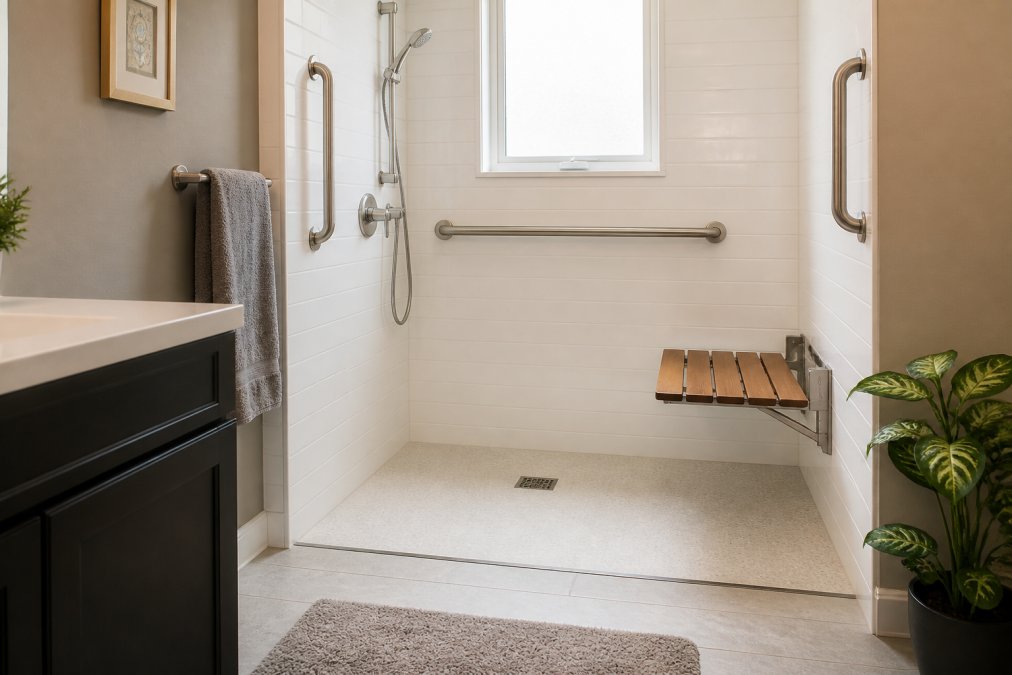
1. Grab Bars and Safety Rails
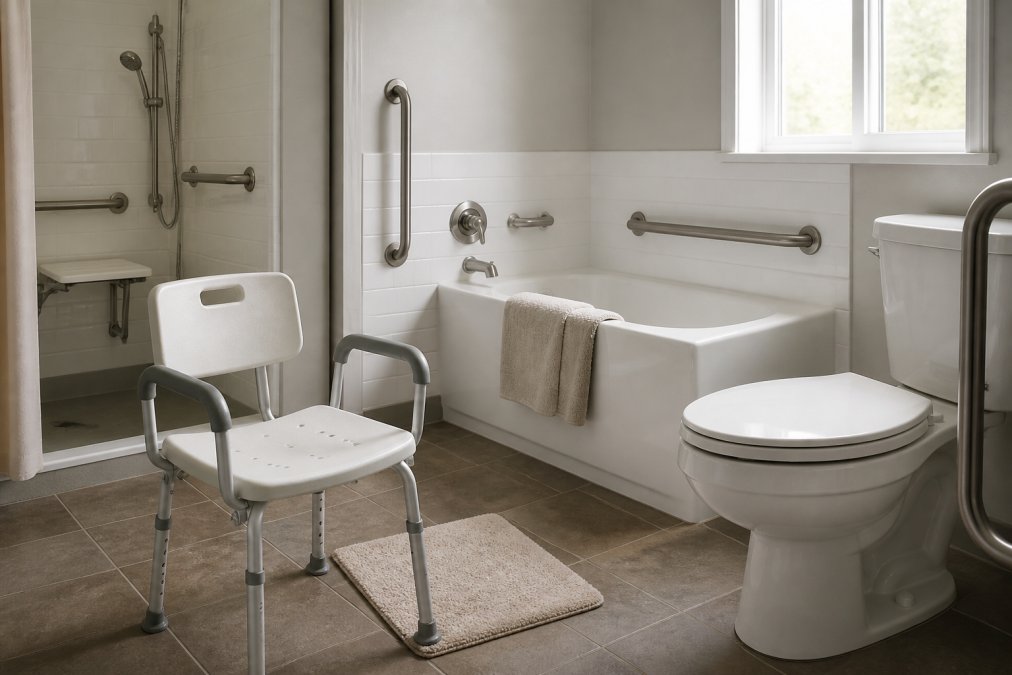
Grab bars can provide valuable support during common bathroom movements such as sitting, standing, and stepping into or out of a bathing area. Modern grab bars come in brushed nickel, matte black, and bronze finishes that look like intentional design choices rather than safety equipment. Placement matters most: beside the toilet, inside the shower stall, and at the tub entry point. A properly installed grab bar gives a senior something solid to push against when rising from a seated position or stepping over a threshold. Critical: a grab bar that pulls out of the wall is worse than no bar at all. Installation into wall studs or with appropriate anchoring hardware is non-negotiable.
2. Tub-to-Shower Conversion and Curbless Showers
Climbing over a bathtub wall is one of the most physically demanding movements in a senior’s daily routine. A tub-to-shower conversion removes the need to step over a high bathtub wall. A curbless or threshold-free shower design goes further: there’s no lip to step over at all, making the space wheelchair and walker accessible. Curbless showers work better for everyone, they’re easier to clean, photograph well, and add resale value. This renovation typically requires a contractor, waterproofing work, and new flooring. The investment is meaningful but permanent and doesn’t need replacement over time.
3. Walk-In Tubs
Walk-in tubs are purpose-built for seniors who want to continue bathing rather than showering. The door is built into the side, so instead of climbing over a high wall, a person opens the door, steps in, closes it, then fills the tub. The threshold is typically very low. The tradeoff is waiting for water to drain before exiting. Some models include heated seats and quick-drain systems. For someone who finds showers disorienting or who has therapeutic reasons for bathing, a walk-in tub is often worth the investment.
4. Slip-Resistant Flooring
Slip-resistant flooring may help reduce slipping risk without requiring the person to take any additional action.Standard ceramic and porcelain tile, particularly when wet, has minimal grip. Slip-resistant tile uses a textured surface or matte finish that maintains traction underfoot. Textured vinyl flooring has become popular for accessible bathroom renovations. It’s softer underfoot than tile, warmer in cold climates, and available in finishes resembling stone or wood.
5. Chair-Height Toilets and Raised Toilet Seats
Standard toilets sit at roughly 35-38 centimetres from floor to seat. Chair-height or “comfort height” toilets sit at 43-48 centimetres, much closer to standard chair height. For someone with knee pain, hip replacement, or reduced core strength, that extra height dramatically reduces the effort required to sit and stand. Raised toilet seats attach to existing toilets and add height without replacing the fixture. Many models include armrests for additional support when rising. Combining a chair-height toilet with a grab bar on the adjacent wall creates a very stable system for a common daily movement that carries significant fall risk.
6. Handheld Showerheads and Shower Benches
A fixed showerhead requires standing in one position. A handheld showerhead on a sliding rail provides complete flexibility: it can be positioned for standing, seated, or assisted bathing. For someone with balance concerns, sitting on a shower bench and directing water where needed changes the entire experience. Wall-mounted fold-down models stay out of the way when not in use and are generally more stable than freestanding options.
7. Lever-Style Faucet Handles and Accessible Storage
Round knob faucets require grip strength and wrist rotation. Lever-style handles operate with a simple downward push, far easier for someone with arthritis, reduced grip strength, or wet hands. Accessible storage follows the same logic. Shelving and medicine cabinets positioned between shoulder and hip height eliminate reaching overhead or crouching low. Ergonomic faucet handles are widely available and can often be swapped without replacing the entire fixture.
8. Improved Bathroom Lighting
Poor lighting contributes to many bathroom falls. Older eyes need more light than younger ones, and the transition from a bright bedroom to a dim bathroom at night is disorienting. Motion-sensor night lights provide low-level illumination without requiring someone to find a switch in the dark. Overhead lighting should be bright and evenly distributed without harsh shadows. Smart lighting that turns on automatically when motion is detected removes the need to interact with a switch, which matters most during nighttime visits.
Grab Bar Installation Standards You Need to Know
Grab bar installation standards in Canada follow guidelines set by the Canadian Standards Association. The key principle is that a grab bar must withstand significant force in multiple directions, because a person grabbing it to prevent a fall applies sudden, heavy load.
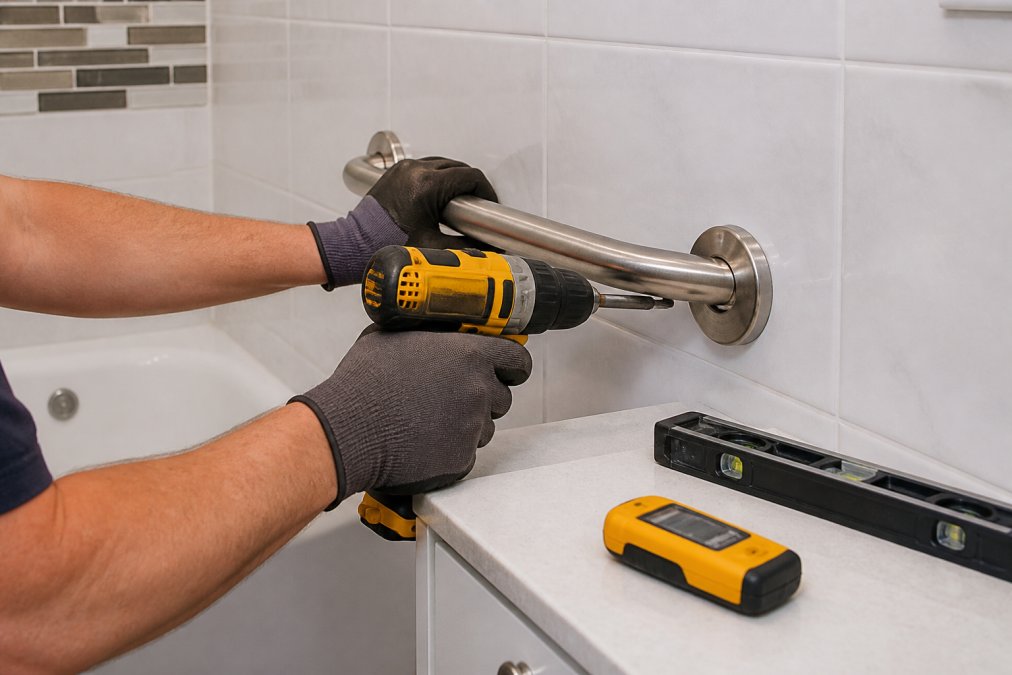
The CSA Group accessibility and barrier-free design standards provide technical specifications for grab bar placement and load requirements in residential settings. Key points include:
- Grab bars must be anchored into wall studs or with toggle bolts rated for the load
- Horizontal bars beside toilets are typically installed 33-36 centimetres from the floor
- Shower grab bars are placed at a height allowing a seated person to push to standing
- Bars must have a diameter allowing a full grip: generally 32-38 millimetres
A grab bar installed only into drywall without stud or anchor support will fail under load. This is the most common installation mistake and is dangerous.
DIY vs. Professional Installation: What Makes Sense
DIY-appropriate modifications include raised toilet seats, freestanding shower benches, bath mats, handheld showerhead replacements (basic plumbing), lever-style faucet handles (moderate plumbing), and motion-activated night lights.
Modifications requiring professional installation include wall-mounted grab bars (structural anchoring), tub-to-shower conversions (waterproofing, tiling, plumbing), walk-in tub installation (plumbing, structural), curbless shower construction (subfloor work, waterproofing), and permanent flooring replacement.
The cost-benefit calculation comes down to risk. A poorly installed grab bar or shower conversion with inadequate waterproofing costs significantly more to fix than professional installation would have cost. For modifications involving structural integrity or water management, professional installation is worth the cost.
|
Modification |
DIY Feasible? |
Professional Recommended? |
|---|---|---|
|
Raised toilet seat |
Yes |
No |
|
Freestanding shower bench |
Yes |
No |
|
Handheld showerhead |
Yes (basic plumbing) |
For complex setups |
|
Lever faucet handles |
Yes (moderate plumbing) |
If pipes are old |
|
Wall-mounted grab bars |
Only with stud access |
Generally yes |
|
Tub-to-shower conversion |
No |
Yes |
|
Walk-in tub installation |
No |
Yes |
|
Curbless shower construction |
No |
Yes |
|
Slip-resistant tile flooring |
Possible |
Recommended |
Cost of Bathroom Modifications for Seniors: What to Expect
The cost of bathroom modifications varies considerably based on scope, materials, and whether professional installation is involved. Lower-cost modifications (typically accessible without a major budget) include grab bars, raised toilet seats, shower benches, handheld showerheads, lever handles, and lighting upgrades. Mid-range modifications include walk-in tubs and full toilet replacements with chair-height fixtures. Higher-investment modifications include tub-to-shower conversions, curbless shower construction, and full flooring replacement.
Government Grants for Home Accessibility in Canada
Several funding programs help offset the cost of home accessibility modifications. The primary federal program is the Home Accessibility Tax Credit administered by the Canada Revenue Agency, which allows eligible individuals to claim a non-refundable tax credit on qualifying renovation expenses. Eligible individuals include seniors and people with disabilities who own their home.
Additional accessibility assistance may be available through provincial, territorial, municipal, or local programs. Eligibility and funding can change, so check current government programs in your province or territory before beginning a renovation.
The Psychological Benefit of Aging in Place Safely
The practical case for bathroom modifications is clear. The emotional case is equally important and less often discussed. Aging in place, the ability to remain in your own home as you age, is strongly associated with well-being, autonomy, and quality of life. A bathroom that feels dangerous undermines this. When someone dreads a daily routine because of fall risk or avoids bathing because the process feels unsafe, the downstream effects on hygiene, health, and mental health are real. Modifications that restore confidence in the bathroom restore confidence in independent living more broadly. Many people who have made these changes report that modifications feel liberating rather than limiting.
Keeping Accessible Fixtures Clean and Working Well
Accessible fixtures require regular maintenance to stay effective. Grab bars should be checked monthly for movement or loosening at mounting points. Walk-in tub door seals need inspection every few months. Slip-resistant flooring accumulates soap scum and mineral deposits in the textured surface, reducing grip over time. Clean with a brush rather than a flat mop. Handheld showerheads can develop mineral buildup affecting spray pattern. Soaking the head in a vinegar solution periodically clears deposits. Shower benches should have hardware checked quarterly if wall-mounted, and surfaces inspected for cracks or splinters if wood. Keeping accessible fixtures in good working order is as important as installing them correctly.
Bathroom modifications for seniors represent one of the most direct investments a person or family can make in long-term safety and independence. The modifications covered here address real hazards in the highest-risk room in the home, and most can be implemented without a full renovation.
Frequently Asked Questions
What are the most essential bathroom safety features for seniors?
Grab bars near the toilet and shower, slip-resistant flooring, and a threshold-free shower entry are three modifications worth considering when improving bathroom safety and accessibility. Adding a handheld showerhead and a shower bench rounds out a solid foundation. These modifications work together to reduce the physical strain of daily routines and give older adults far more confidence in a space that carries real fall risk. Start with grab bars and non-slip flooring if budget is limited.
What are the best grab bar placement standards for bathroom safety?
CSA B651 provides accessibility guidance for grab-bar dimensions, positioning, clearance and structural strength. Proper placement depends on the bathroom layout and how the bar will be used. Grab bars must also be securely installed so they can withstand substantial force. For a home installation, consider having an occupational therapist or qualified professional assess appropriate placement and ensure the bar is securely mounted.
Is a walk-in tub worth the investment for seniors?
Walk-in tubs reduce the need to step over a high tub threshold, which is a common fall point. They suit older adults who want to continue bathing rather than switching to a shower. The trade-off is cost: installation is more involved than adding grab bars, and you must wait inside the tub while it fills and drains. For someone with significant mobility challenges who values soaking, the benefit is real. Those primarily concerned with fall prevention often find a curbless shower conversion more practical.
What government grants are available for bathroom modifications for seniors?
The federal Home Accessibility Tax Credit (HATC) may allow eligible individuals to claim up to $20,000 in qualifying home-renovation expenses. Seniors aged 65 or older and people eligible for the Disability Tax Credit may qualify, subject to CRA requirements. Qualifying renovations can include improvements intended to increase accessibility, mobility or functionality, or reduce the risk of harm. Provincial, territorial and municipal accessibility programs may also be available, so check current programs where you live before starting a renovation.
How can I make a bathroom more accessible in a small or oddly shaped space?
Small bathrooms benefit most from space-efficient upgrades: a fold-down shower bench takes no floor space when not in use, a wall-mounted grab bar replaces bulkier equipment, and a handheld showerhead on a sliding bar adds flexibility without requiring layout changes. Lever faucet handles and bright, shadow-free lighting improve usability without any structural work. An occupational therapist can do a home safety assessment and recommend modifications matched to your specific floor plan and mobility needs.