Table of Contents
- What Makes a Bathroom Grab Bar Actually Useful
- Types of Bathroom Grab Bars for Seniors
- Material, Grip, and Weight Capacity: What the Specs Actually Mean
- Placement and Height: Where Bathroom Grab Bars Make the Most Difference
- How to Install Grab Bars in a Shower: Stud Mounting vs. Toggle Anchors
- Why an Occupational Therapist Bathroom Assessment Changes Everything
- Design, Aesthetics, and Fitting Grab Bars Into Your Bathroom
- Conclusion
Last Updated: August 24, 2026
Bathroom grab bars are one of the most practical home modifications for aging in place, and one of the most misunderstood. A poorly chosen or improperly installed grab bar may not provide reliable support when it is needed most. This guide covers everything needed to choose, position, and install bathroom grab bars with confidence: the right types, materials, placement principles, and honest advice about when to call a professional.
What Makes a Bathroom Grab Bar Actually Useful
A grab bar is useful when it holds firmly under real load, sits exactly where a hand reaches naturally, and provides enough grip to hold onto when wet.
A bathroom grab bar must be securely anchored to a structure or mounting system designed to support the required load. Depending on the wall construction and the grab bar, this may involve wall studs, reinforced backing, or an appropriately rated anchoring system. The grab bar and its mounting system should be rated for their intended use and installed according to the manufacturer’s instructions, since a person may place substantial force on the bar during a sudden loss of balance.
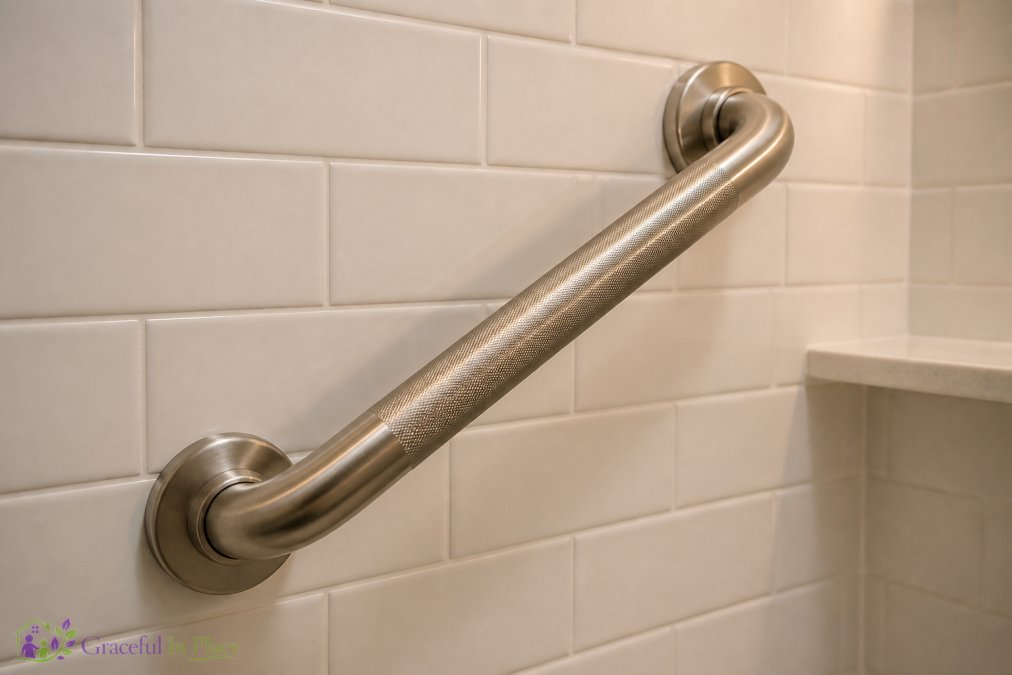
Grip texture is an important consideration, particularly in wet environments. Textured, knurled, or peened finishes can provide additional grip when hands or surfaces are wet.
Placement determines whether a bar actually gets used. A bar installed at the wrong height or angle is easy to ignore. One positioned exactly where a hand naturally reaches when standing from the toilet, stepping over a tub edge, or steadying in a shower stall becomes an automatic habit.
Types of Bathroom Grab Bars for Seniors
Choosing the right type of bathroom grab bar starts with understanding where it will be used and what movement it needs to support.
| Bar Type | Best For | Mounting | Limitation |
|---|---|---|---|
| Straight horizontal | Shower walls, tub side | Stud or toggle | Fixed single direction |
| Straight diagonal (angled) | Tub entry, step-over | Stud or toggle | Requires precise angle |
| L-shaped | Shower corner, toilet area | Two walls or stud | Needs corner space |
| U-shaped / flip-down | Toilet side support | Wall stud | Requires clearance |
| Suction cup / portable | Travel, temporary use | Suction to tile | Not load-bearing |
Straight Bars
Straight grab bars are among the most common and versatile options. Depending on where they are installed and how support is needed, they may be positioned horizontally, vertically, or at an angle. The appropriate length and position depend on the location, the intended use, and the needs of the person using the bathroom.
L-Shaped and Angled Bars
L-shaped bars combine two support surfaces in a single unit. The vertical section helps with the initial push to standing; the horizontal section provides stability once upright. Both sections of the bar must be securely anchored using a mounting method appropriate for the wall construction and the manufacturer’s installation requirements.
U-Shaped and Flip-Down Bars
U-shaped bars mount to a single wall and project outward, creating support on both sides of the hand. Flip-down bars fold flat against the wall when not in use. Because these bars project outward from the wall, secure installation is especially important. They should be installed using a mounting method appropriate for the wall construction, the bar’s design, and the manufacturer’s requirements.
Suction Cup and Portable Options
Suction cup grab bars attach to smooth tile without drilling. They are useful for travel and renters, but should not be the primary support for someone with significant balance challenges.
Material, Grip, and Weight Capacity: What the Specs Actually Mean
Stainless Steel vs. Chrome vs. Plastic
Stainless steel is a durable and corrosion-resistant material commonly used for bathroom grab bars. It performs well in humid and wet environments and can provide long-lasting structural performance when properly manufactured, installed, and maintained.
Chrome-plated steel is common and generally adequate for residential use. Chrome provides corrosion resistance, though it can chip or wear over time. Chrome bars often match existing bathroom hardware.
Plastic or plastic-covered grab bars vary considerably in construction and strength. Material alone should not be used to determine whether a grab bar is suitable for load-bearing support. Check the manufacturer’s stated load rating, intended use, and installation requirements before choosing one.
Canada’s CSA/ASC B651 accessibility standard includes structural-strength requirements for grab bars used in accessible environments. It specifies that an installed grab bar must resist a force of at least 1.3 kN applied in any direction. For home use, choose a grab bar designed and rated for its intended purpose and make sure it is installed according to the manufacturer’s instructions.
Grip Texture and Slip Resistance
Grip texture is an important consideration in a wet bathroom environment. Textured surfaces such as knurled or peened finishes, as well as some slip-resistant coatings, can provide additional grip when hands or surfaces are wet. When comparing grab bars, consider both the gripping surface and the manufacturer’s specifications for the bar’s intended use.
Weight Capacity and Load-Bearing Requirements
A grab bar’s rated capacity is only meaningful when the bar is securely installed using a mounting method capable of supporting the required load. The grab bar, mounting hardware, wall structure, and installation method all work together as a system, so the manufacturer’s installation requirements should always be followed.
The Canada Mortgage and Housing Corporation’s aging-in-place resources recommend installing grab bars into walls with sufficient structural support, such as wall studs or reinforced walls.
Placement and Height: Where Bathroom Grab Bars Make the Most Difference
Placement is the variable that most separates an effective grab bar installation from an ineffective one.
Shower and Tub Placement
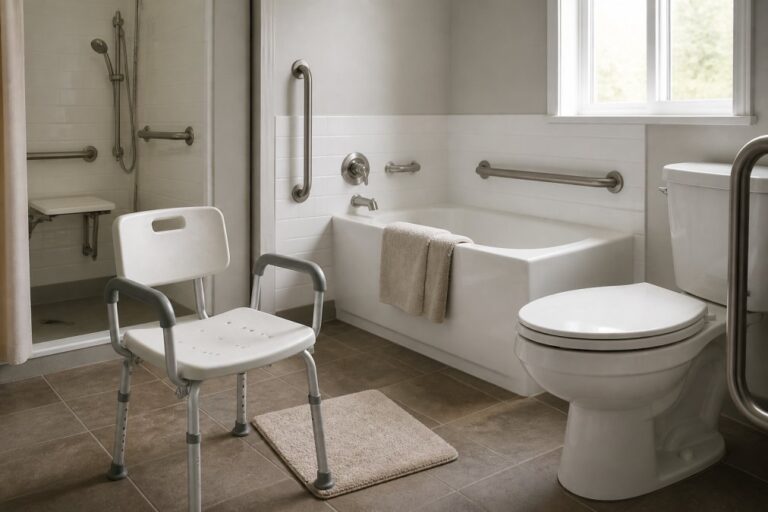
For a walk-in shower, grab bars may be positioned on the side wall, back wall, and near the shower entrance, depending on the shower design and the needs of the person using it. A vertical bar near the entrance can provide support when stepping in or out, while horizontal bars can provide support while standing or moving within the shower.
For a bathtub, grab-bar placement should reflect how the person gets into and out of the tub and whether support is needed while seated, standing, or both. Horizontal and vertical bars may be used in different locations to provide support during these movements.
The shower floor and tub floor should also include a slip-resistant mat or textured surface. Grab bars and slip-resistant flooring work together.
Toilet Area Placement
Beside the toilet, grab bars can provide support when sitting down, standing up, and transferring. Depending on the bathroom layout and the person’s needs, support may be provided by a side-wall grab bar, a rear-wall bar, or an appropriately designed flip-down bar. Placement should allow the person to reach and use the bar comfortably without twisting or overreaching.
How to Install Grab Bars in a Shower: Stud Mounting vs. Toggle Anchors
The installation method determines whether the bar actually holds under load.
Wall Types and Reinforcement Considerations
Bathroom wall construction varies, so the appropriate mounting method depends on what is behind the finished wall and on the grab bar manufacturer’s installation requirements. Mounting into suitable structural framing or reinforced backing can provide strong support.
Some anchoring systems are specifically designed and rated for grab-bar installation when structural framing is not available at the desired location. If such a system is used, it should be appropriate for the wall construction and installed according to the manufacturer’s instructions.
Wall reinforcement, such as plywood or solid blocking installed behind the finished wall, can provide greater flexibility in grab-bar placement. This is especially worth considering when a bathroom is already being renovated.
DIY Installation: Honest Risks to Know First
Many homeowners successfully install grab bars themselves when studs align with the required position. Where it gets complicated:
- Tile drilling requires a masonry or diamond-tipped bit and patience. Cracking a tile creates a waterproofing problem.
- Locating studs behind tile is less reliable than behind drywall.
- Toggle anchor installation requires accurate knowledge of wall thickness.
- An improperly installed bar may feel solid initially but fail under sudden load.
One risk of DIY installation is that an installation problem may not become apparent until substantial force is placed on the grab bar.
Professional Installation: When It’s Worth It
A qualified contractor or certified aging-in-place installer brings tools to locate studs accurately behind tile and experience to recognize when wall construction requires a different approach.
Professional installation is particularly worth considering when:
- The wall construction is unknown or non-standard
- The ideal bar position does not align with studs
- Multiple bars are being installed as part of a broader bathroom accessibility project
- The person who will use the bars has significant mobility challenges
For someone with changing mobility, balance, strength, or transfer needs, an occupational therapist can also help assess how the bathroom is used and suggest grab-bar locations suited to the individual’s needs.
Why an Occupational Therapist Bathroom Assessment Changes Everything
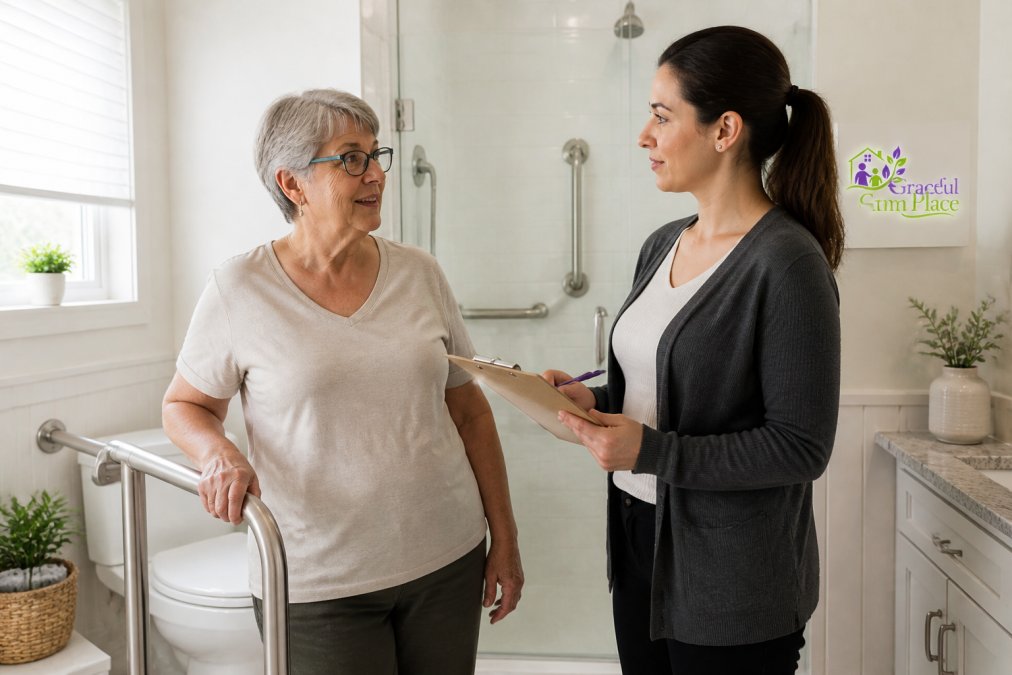
A person who is 157 cm tall and has right-side weakness needs bars in different locations than a person who is 183 cm tall with bilateral hip replacement. An occupational therapist can account for that. Depending on where you live and your circumstances, occupational therapy services may be available through provincial, territorial, or local home and community care programs. Check with your local health authority or healthcare provider to learn what services may be available.
An occupational therapist assessment extends beyond bar placement to identify other bathroom safety factors—floor texture, lighting, transfer techniques, and other mobility aids—that work together with grab bars to support safer, more independent bathroom use.
Design, Aesthetics, and Fitting Grab Bars Into Your Bathroom
The assumption that grab bars must look medical is outdated. Universal design, the principle that accessible features should work for everyone and look like they belong, has produced a generation of grab bars that are genuinely attractive bathroom hardware.
Brushed nickel, matte black, oil-rubbed bronze, and polished chrome finishes are all available in grab bar form. Bars with clean lines and concealed screw flanges look like intentional design choices. A bar that matches the towel bar and toilet paper holder finish reads as a coordinated bathroom.
The functional requirements do not change with aesthetics. A matte black bar still needs to be stud-mounted or properly anchored. The finish should still provide an appropriate gripping surface for the bar’s intended use. Ergonomic design and good looks are not mutually exclusive, but the safety specifications come first.
For bathrooms where a grab bar installation is part of a broader renovation, adding reinforced backing panels behind the entire shower surround and toilet wall allows bars to be placed anywhere on those surfaces now or in the future, without the constraint of stud location.
Some qualifying home accessibility renovations may be eligible for financial assistance or tax relief. At the federal level, the Home Accessibility Tax Credit may apply to eligible renovation expenses, including certain improvements that improve accessibility or reduce the risk of harm. Eligibility requirements can change, so check current Government of Canada and provincial or territorial programs before beginning a renovation.
| Consideration | What to Look For | Common Mistake |
|---|---|---|
| Material | Grab bar designed and rated for load-bearing support | Choosing based on material or appearance alone |
| Grip texture | A gripping surface appropriate for wet bathroom use | Choosing a finish without considering grip when wet |
| Mounting method | Secure mounting appropriate for the wall construction and manufacturer’s requirements | Using mounting hardware or methods not designed for the required load |
| Weight capacity | Manufacturer’s load rating appropriate for the intended use | Considering the bar’s rating without considering how it will be mounted |
| Placement | Based on natural reach and movement | Installing at “standard” height without testing |
| Bar type | Matched to the specific movement it supports | Using one bar type everywhere |
| Aesthetics | Finish matched to existing hardware | Treating appearance and safety as separate decisions |
Choosing and installing bathroom grab bars rewards careful thought. The right bar in the right place, properly mounted, provides genuine confidence and independence for years. Graceful In Place offers trusted advice for exactly these decisions: practical, honest guidance about bathroom safety, home accessibility, and the modifications that make independent living more comfortable and secure.
Frequently Asked Questions
What features should I look for in bathroom grab bars for seniors?
Look for a grab bar designed for load-bearing support, with a gripping surface appropriate for wet bathroom use and corrosion-resistant construction. Canada’s CSA accessibility standard specifies a grab-bar diameter between 30 mm and 40 mm and requires installed grab bars to meet structural-strength requirements. Secure mounting is essential, so follow the manufacturer’s installation requirements. An occupational therapist can help match the bar’s length and placement to your specific mobility needs.
What is the difference between suction cup and permanent-mount grab bars?
Permanent-mount bars are anchored directly into wall studs or reinforced blocking, making them load-bearing and suitable for daily support. Suction cup bars attach without tools and are easy to reposition, but they can release unexpectedly on wet or textured tile surfaces. For reliable balance assistance in the shower or beside the toilet, a permanently mounted bar is the safer choice. Suction cup options work best as a temporary solution while a permanent installation is being arranged.
Do I need a professional to install bathroom grab bars?
Not always, but the stakes are high enough to think carefully before doing it yourself. A grab bar that pulls away from the wall mid-use offers no support at all. If you can locate studs confidently, use the correct hardware, and work with your specific wall type, DIY installation is possible. For tile walls, hollow walls, or any situation where you are uncertain about the structure behind the surface, hiring a licensed contractor or handyperson is a worthwhile investment in lasting safety.
How do I determine the correct placement for bathroom grab bars?
Placement depends on where you actually need support: entering and exiting the shower, lowering onto the toilet, or stepping over the tub edge. An occupational therapist bathroom assessment is the most reliable way to identify the exact locations and angles that match your movement patterns, rather than guessing from a general guide.
Are bathroom grab bars covered by any Canadian programs?
Some provincial home modification programs, veterans’ benefits, and municipal grants offer funding toward bathroom safety modifications including grab bars. Eligibility and amounts vary by province. An occupational therapist can often support a funding application by documenting the clinical need. Also check the federal Home Accessibility Tax Credit, as eligible expenses can include the purchase and installation of grab bars. Provincial, territorial, and local programs may also be available, so check current government resources for your area.