For many people, aging in place means continuing to live in the home they already know and love. But a home that has worked well for years may need a few thoughtful changes as mobility, balance, vision or everyday routines change.
The good news is that creating a safer home doesn’t necessarily mean a major renovation.
This aging in place checklist focuses on practical changes that can make everyday activities safer, more comfortable and easier to manage. Some improvements cost very little. Others may require planning or professional installation. The important thing is to look at how the home is actually being used and make changes where they will matter most.
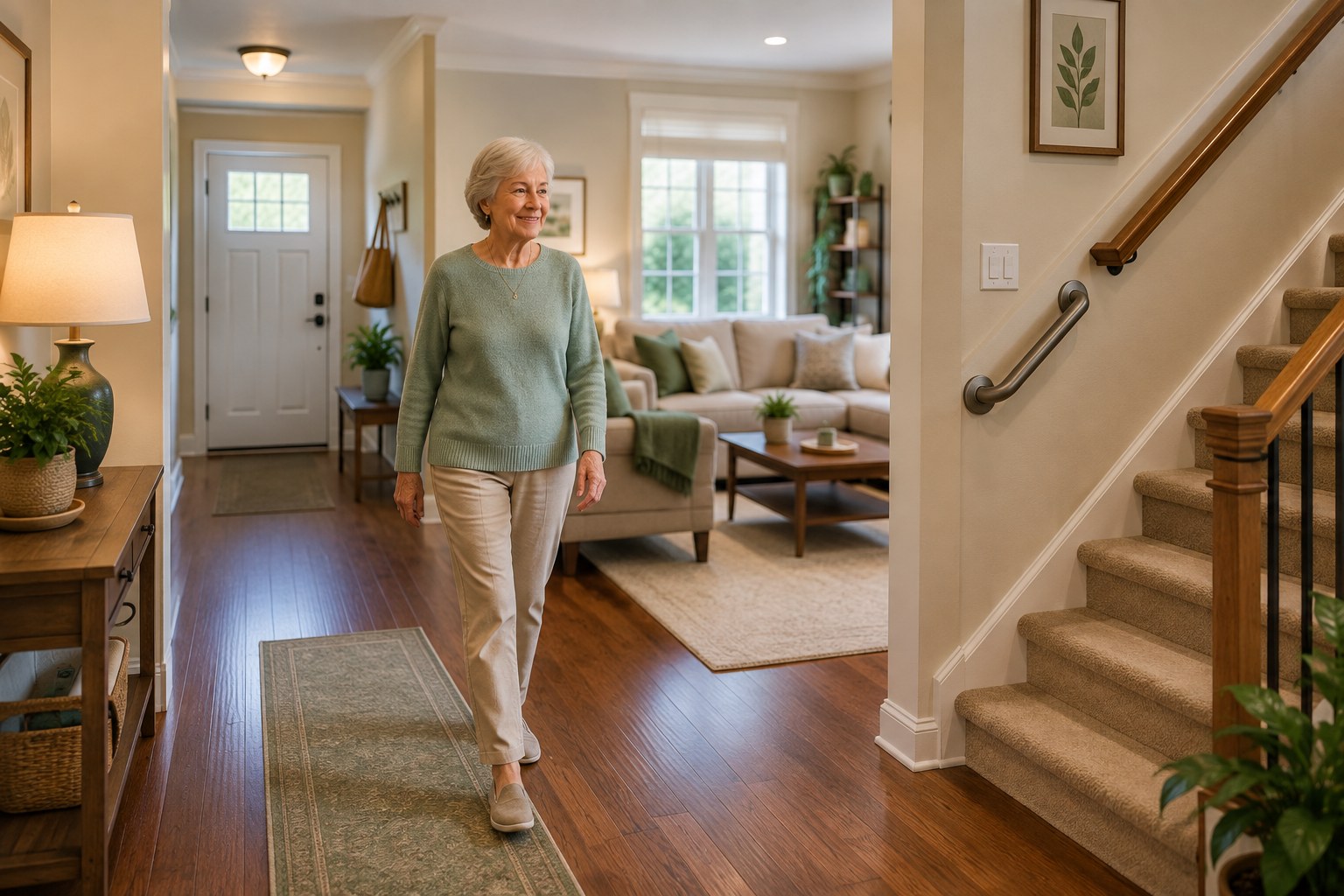
1. Clear Everyday Pathways
Start with the routes used most often throughout the day.
Walk from the bedroom to the bathroom, from the living room to the kitchen, and from the main entrance to the areas where you spend the most time.
Look for anything that makes those routes unnecessarily difficult.
Small tables, decorative objects, electrical cords, baskets and other items can narrow a pathway or create obstacles. Furniture arrangements that once worked perfectly may become less convenient when someone begins using a cane or walker.
You don’t need to remove everything from a room. The goal is simply to create clear, comfortable pathways that are easy to navigate.
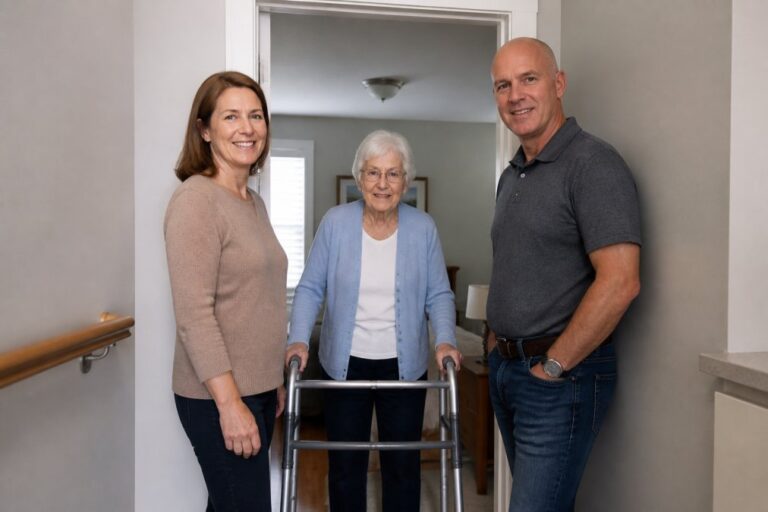
If a walker or other mobility aid may eventually be needed, allowing a little extra space now can make the transition easier later.
2. Improve Lighting Where It Matters Most
Good lighting can make a surprisingly large difference in how safely and confidently someone moves around the home.
Pay particular attention to:
- hallways
- stairways
- entrances
- bathrooms
- the route between the bedroom and bathroom
- areas where flooring or elevation changes
Night-lights can be helpful in hallways and bathrooms, especially for nighttime trips.
Also consider whether light switches are easy to reach before entering a dark room. Motion-activated lighting may be useful in selected areas where reaching for a switch is inconvenient.
The goal isn’t simply to make the house brighter. It’s to make sure important walking areas and potential obstacles are easy to see when they need to be seen.
3. Reduce Slip and Trip Hazards
Some of the simplest home-safety improvements involve looking down.
Loose rugs, curled rug edges, slippery flooring, clutter and electrical cords crossing walking areas can all create unnecessary hazards.
Take a careful look at the floors throughout the home.
Ask:
Could a foot, cane or walker catch on anything here?
Area rugs don’t automatically need to disappear, but they should lie flat and remain securely in place. If a rug continually shifts, bunches or curls, it may be better moved or removed.
Pay particular attention to places where one type of flooring meets another. Even a small change in height can matter when balance or mobility becomes more limited.
4. Make Stairs and Entrances Easier to Navigate
Stairs deserve special attention because they’re used repeatedly and often while carrying something.
Make sure stairways have good lighting and that steps are easy to distinguish.
Secure handrails are especially important. Depending on the staircase and the person’s needs, having support available on both sides may make climbing and descending easier.
Don’t forget the home’s entrances.
Consider the entire route:
How do you get from the driveway or sidewalk through the door and safely inside?
Look at steps, railings, lighting, door thresholds and the area where packages or groceries may be set down.
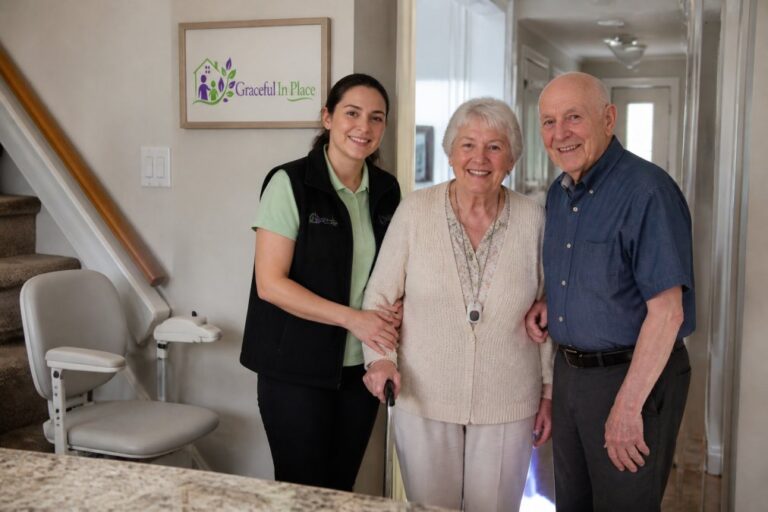
If stairs are becoming increasingly difficult, it may also be worth discussing longer-term accessibility options with a qualified professional rather than waiting until using the stairs becomes a daily struggle.
5. Add Bathroom Support Where It’s Most Useful
Bathrooms combine water, hard surfaces and movements such as stepping, turning, sitting and standing. That makes thoughtful planning especially valuable.
Start by considering where support is actually needed.
Grab bars may be helpful near the toilet, bathtub or shower, but placement matters. They should be properly positioned for the person using them and securely installed into appropriate structural support.
A towel bar should not be treated as a substitute for a properly installed grab bar.
Other useful considerations may include:
- non-slip bathing surfaces
- a shower chair or bath seat when appropriate
- a handheld showerhead
- easier-to-operate faucets
- adequate lighting
- keeping commonly used toiletries within comfortable reach
The goal is not to fill the bathroom with equipment. It’s to make routine movements easier and more secure.
6. Keep Frequently Used Items Within Easy Reach
Everyday storage can become frustrating—or risky—when frequently used items require stretching, bending deeply or climbing onto a stool.
Look around the kitchen first.
Are commonly used dishes stored on a high shelf? Are heavy pots kept in a low cupboard that’s difficult to reach? Does someone regularly use a step stool to reach everyday items?
Consider moving the things used most often to shelves and drawers between approximately waist and shoulder height whenever practical.
Do the same in closets, bathrooms, laundry areas and bedrooms.
A simple reorganization can sometimes improve everyday convenience without buying or installing anything at all.
7. Make the Bedroom Easier to Use
The bedroom should be comfortable to move around in, including at night.
Make sure there is a clear route between the bed, doorway and bathroom.
Consider whether the bed height makes getting in and out comfortable. A bed that’s extremely low or unusually high may make transfers more difficult for some people.
Keep a lamp or light control within easy reach of the bed.
Frequently used items—glasses, phone, medications when appropriate, tissues or water—should have a convenient place where they can be reached without unnecessary stretching.
If mobility is changing, leave enough room beside the bed for safe movement and any mobility aid that may be used.
8. Choose Seating That’s Easy to Get In and Out Of
A wonderfully soft chair isn’t necessarily a wonderfully practical chair.
Deep, low seating can make standing difficult, particularly when the cushions allow the body to sink far below the knees.
When evaluating everyday seating, consider:
- seat height
- seat depth
- firmness
- supportive armrests
- stability
- how easily the person can sit down and stand again
For someone who has increasing difficulty rising from a conventional chair, a properly fitted lift chair may be worth considering.
But the important word is fitted. The right chair should suit the person’s body size, mobility needs and room—not simply have the longest list of features.
9. Plan Ahead for Changing Mobility Needs
It’s often easier to make thoughtful decisions before a change becomes urgent.
You don’t need to redesign a home for problems that may never happen. But it can be useful to ask:
If walking became more difficult, would this home still work?
Consider doorway widths, stairs, bathroom access, bedroom location and the amount of open space available for a walker or other mobility aid.
If you’re planning a renovation anyway, accessibility can sometimes be incorporated without making the home look institutional.
For example, a bathroom renovation may be an opportunity to consider future grab-bar placement or a more accessible shower configuration.
Planning ahead simply gives you more choices.
10. Walk Through the Home as You Actually Live In It
This may be the most useful step on the entire aging in place checklist.
Don’t evaluate the house as a collection of rooms. Evaluate it as a collection of daily routines.
Think about an ordinary day.
How do you:
- get out of bed at night?
- carry laundry?
- bring groceries into the house?
- prepare meals?
- get in and out of your favourite chair?
- enter and leave through the main door?
- take a shower?
- reach frequently used items?
- move through the house when tired?
Sometimes the biggest inconvenience isn’t where you expect it to be.
A perfectly safe-looking home can contain one awkward doorway, poorly positioned piece of furniture or inconvenient daily routine that causes difficulty over and over again.
Watching how everyday life actually happens can reveal improvements that a generic home-safety list might miss.
A Quick Aging in Place Checklist
Walk through your home and ask:
- Are frequently used pathways clear?
- Is lighting adequate in hallways, stairs and entrances?
- Are rugs and flooring secure and free from trip hazards?
- Are stairs equipped with secure handrails?
- Are entrances easy to navigate?
- Is appropriate support available in the bathroom?
- Are everyday items stored within comfortable reach?
- Is the bedroom easy to move around in at night?
- Is frequently used seating easy to get into and out of?
- Would the home still function well if mobility needs changed?
You don’t have to fix everything at once.
Start with the areas that are used most frequently or that already feel inconvenient. A few well-chosen changes may make a meaningful difference in comfort, confidence and independence.
A Safer Home Should Still Feel Like Home
Aging in place isn’t about turning a familiar home into a medical environment.
It’s about helping the home continue to support the person living there.
Sometimes that means adding equipment. Sometimes it means changing furniture, improving lighting or reorganizing a cupboard. And sometimes the best improvement is simply noticing a daily difficulty that has gradually become accepted as normal.
Use this aging in place checklist as a starting point, then adapt it to the people, routines and spaces that make your home your own.
A safer home should still feel exactly like that:
Home.