

Table of Contents
- Understanding Mobility Aids for Fixed Income
- Types of Mobility Aids and What They Offer
- Government Funding and Ontario’s Assistive Devices Program (ADP)
- Getting an Occupational Therapist Mobility Assessment
- Tax Credits for Eligible Mobility Equipment
- Refurbished Mobility Aids: A Cost-Effective Option
- Renting vs. Buying Mobility Equipment
- Home Modifications to Support Mobility
- Frequently Asked Questions
Last Updated: September 1, 2026
Understanding Mobility Aids for Fixed Income
Staying independent at home becomes easier when the right mobility aids match both physical needs and financial reality. Many older Canadians live on fixed incomes, pensions, retirement savings, or government benefits, and face real constraints when choosing mobility aids. Depending on where you live and the type of equipment you need, government programs, tax credits, community organizations, refurbished equipment and rental options may help reduce out-of-pocket costs..
Mobility aids for fixed income range from simple canes to powered scooters, and the best choice depends on individual mobility challenges, home layout, and access to financial assistance. Programs such as Ontario’s Assistive Devices Program (ADP), along with other provincial or territorial assistance programs and eligible medical expense tax credits, may help reduce out-of-pocket costs. Refurbished equipment and rental options may also help stretch a limited budget further.
This guide from Graceful In Place covers the types of mobility aids available, how to access government funding, and practical strategies for making mobility equipment affordable on a fixed income.
Types of Mobility Aids and What They Offer
Choosing the right mobility aid starts with understanding what each type does and which suits specific situations. Mobility challenges vary widely, some people need support for balance while walking short distances, others require a seat for longer trips, and some have lost the ability to walk independently. The aid that works best depends on the person’s strength, balance, living space, and daily routines.
Canes and Walking Sticks
A cane is the simplest and most affordable mobility aid. It provides light support for balance and reduces strain on one leg or hip during walking. Canes work best for people who need minimal assistance and can walk independently but want extra stability on uneven surfaces or longer outings.
Canes come in single-point styles (one tip) or quad canes (four feet for wider base of support). Single-point canes suit people with mild balance issues, while quad canes offer more stability for those with greater weakness or balance loss. Adjustable height is important. As a general fitting guide, the top of the cane should be around the wrist crease when the person is standing upright with their arms relaxed at their sides.
The main limitation is that canes don’t provide a seat, so they’re not suitable for people who tire quickly or need frequent rest breaks. They also require reasonable grip strength and coordination.
Walkers and Rollators
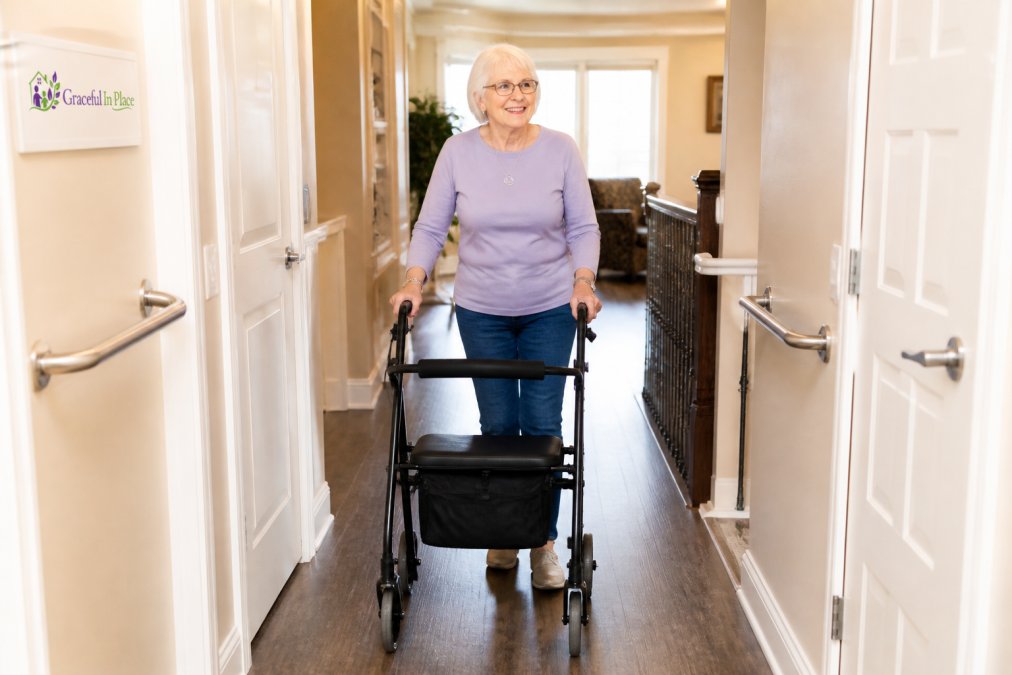
A walker provides more substantial support than a cane and suits people with moderate balance loss or weakness. Standard walkers have four legs and require lifting and moving with each step. Rollators (also called rolling walkers) have wheels, hand brakes, and often include a built-in seat, making them popular for people who need both support and the option to sit and rest.
Rollators are particularly practical for daily living because they reduce effort compared to standard walkers and allow breaks without finding a chair. Many rollators fold for transport and storage. The trade-off is that they’re heavier and require more space in the home than canes, and they need a firm grip to operate the hand brakes safely.
Walkers and rollators suit people with arthritis, weakness after surgery or illness, or balance problems that make walking unsteady. They work well in homes with hallways wide enough to accommodate them and in communities where sidewalks are accessible.
Wheelchairs and Power Scooters
Manual wheelchairs suit people who cannot walk safely or far but retain good upper-body strength and hand function. They’re portable, affordable, and give users control over movement. Power wheelchairs and scooters are for people with limited arm strength or endurance who need powered mobility.
Power scooters (three- or four-wheeled) are easier to operate than power wheelchairs for some users because they require less upper-body control. They work well for outdoor use and longer distances. Power wheelchairs offer more precise control and maneuverability in tight spaces like small homes or bathrooms.
The main considerations are cost (power options are significantly more expensive), battery charging and maintenance, storage space, and whether the home and community are accessible for wheelchair use. Some people use both a manual wheelchair for indoor use and a scooter for outdoor trips.
Government Funding and Ontario’s Assistive Devices Program (ADP)
Government assistance for mobility equipment varies across Canada. In Ontario, the Assistive Devices Program (ADP) helps eligible residents with long-term physical disabilities pay for certain approved mobility aids.
To qualify for mobility-aid funding through Ontario’s ADP, you generally must be an Ontario resident, have a valid Ontario health card, and have a disability requiring the mobility aid for six months or longer. Income is not used to determine eligibility.
For approved mobility aids, ADP generally pays 75% of the approved price and the individual pays the remaining 25%. People receiving certain provincial income-support benefits may qualify for 100% coverage of the approved cost.
Not every mobility aid is covered. Eligible categories include certain manual and power wheelchairs, power scooters and adult wheeled walkers. Standard walking canes and non-wheeled walkers are among the items not covered.
Applicants generally begin with an assessment by an occupational therapist or physiotherapist registered with ADP. The approved equipment must then be purchased through an ADP-registered vendor. It is important to complete the required process before purchasing equipment because buying first may make the purchase ineligible for ADP funding.
Other provinces and territories have their own programs and eligibility requirements, so check with your provincial or territorial government for current information.
Getting an Occupational Therapist Mobility Assessment
An occupational therapist assessment is often the gateway to government funding and ensures the right device matches individual needs. The assessment examines mobility, balance, strength, home layout, and daily routines to recommend appropriate aids.
During an assessment, the therapist observes how the person moves, tests balance and strength, and discusses activities that are difficult or risky. They measure doorways and hallways to confirm that recommended equipment fits the home. They also ask about daily routines, whether the person lives alone, has caregiver support, or needs devices for outdoor use, because these factors influence which aid is most practical.
Many occupational therapists work in hospitals, rehabilitation clinics, or private practice. Some are covered by provincial health insurance for certain referrals (such as after hospital discharge), while others charge private fees. It’s sensible to ask about fees upfront.
An assessment can help identify the most appropriate mobility aid and may also be required when applying for certain government funding programs. The therapist can also recommend specific features, such as a rollator with a higher seat for someone with knee arthritis, or a power scooter for someone with limited walking endurance.
Tax Credits for Eligible Mobility Equipment
Some mobility equipment may qualify as an eligible medical expense for Canada’s Medical Expense Tax Credit (METC). This is a non-refundable tax credit rather than a deduction from income.
Eligible expenses can include certain walking aids, wheelchairs and scooters when the applicable CRA requirements are met. Some devices require a prescription or other supporting documentation.
Keep receipts and any prescriptions or medical documentation required for the particular device. Because eligibility requirements can vary by item and tax rules can change, check the Canada Revenue Agency’s current list of eligible medical expenses before making a claim.
Some individuals with severe and prolonged impairments may also qualify separately for the Disability Tax Credit (DTC). Eligibility for the DTC is based on specific criteria and requires CRA approval.
Refurbished Mobility Aids: A Cost-Effective Option
Refurbished mobility aids are a practical way to stretch a fixed income. A refurbished mobility aid is previously used equipment that has been prepared for resale or reuse. The inspection, cleaning, repair and warranty process can vary by seller, so it’s important to buy from a reputable source and ask what checks or servicing have been completed. It functions like new but costs significantly less than a brand-new item.
Refurbished equipment is available through hospital equipment loan programs, medical equipment retailers, and online marketplaces. Hospital programs often loan refurbished walkers, wheelchairs, and canes temporarily at no cost or for a small fee. Some retailers provide a limited warranty on refurbished equipment and may inspect or service devices before sale.
The advantages are clear: lower cost and reduced environmental impact. The main consideration is that refurbished items may have limited or no warranty, and customization options (such as adjusting height or adding accessories) may be more limited than with new equipment. Inspecting the device in person before purchase, if possible, helps confirm condition and fit.
Many people use refurbished equipment as a temporary solution while waiting for government funding approval or to test whether a particular type of aid suits their needs before investing in a new model.
Renting vs. Buying Mobility Equipment
Renting mobility equipment makes sense in several situations. Short-term recovery after surgery, temporary mobility loss, or testing whether a device meets needs are all good reasons to rent rather than buy.
Rental costs vary by device and rental period. Long-term rentals can eventually cost more than purchasing, so compare the total rental cost over the expected period of use with the purchase price before deciding.
Renting also avoids the responsibility of maintenance and repair. Rental companies handle servicing and replacement if equipment fails. For people uncertain about which device will work best, renting allows testing without financial commitment.
Purchasing is appropriate when mobility needs are long-term or permanent. Owned equipment can be customized, modified, and kept as long as needed. It also becomes an asset that can be donated, sold, or passed to family members if needs change.
| Consideration | Renting | Buying |
|---|---|---|
| Short-term use (weeks-months) | More economical | Higher upfront cost |
| Long-term use (1+ years) | Becomes expensive | More economical overall |
| Maintenance and repair | Included with rental | Owner’s responsibility |
| Customization | Limited | Full control |
| Ownership | No | Yes, can donate or resell |
| Testing a device type | Good option | Risky without trying first |
Home Modifications to Support Mobility
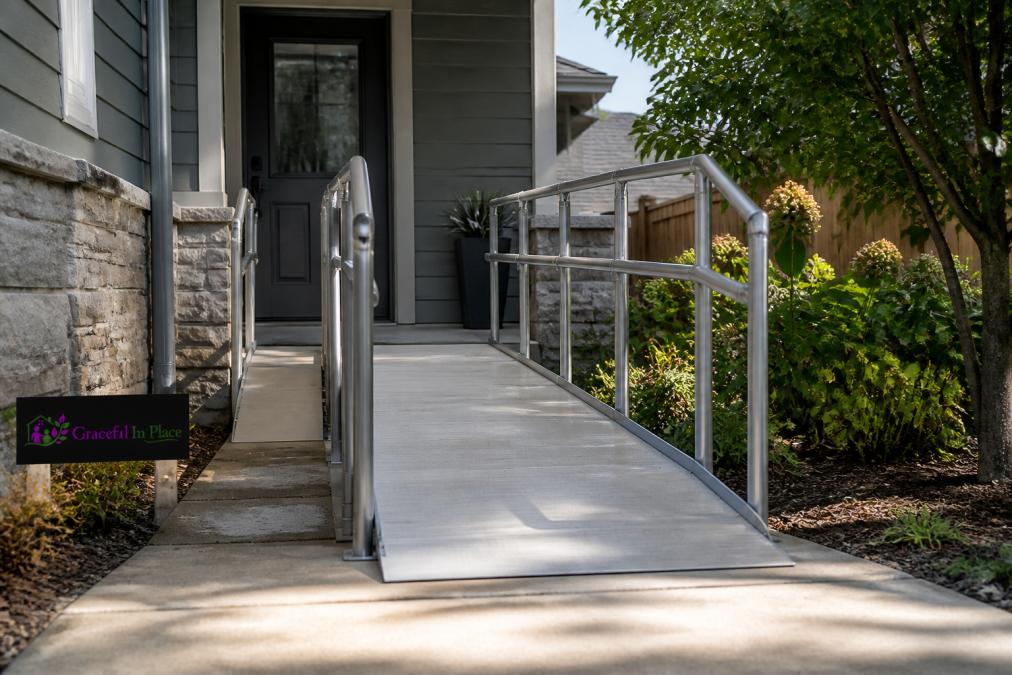
Beyond mobility aids themselves, home modifications make movement safer and easier. Grab bars in bathrooms, ramps at entrances, and wider doorways reduce fall risk and allow independent movement through the home.
Common modifications include:
- Grab bars and handrails: Installed in bathrooms near toilets and showers, and along hallways. They provide stability and support during transfers and walking.
- Ramps: Can provide wheelchair or rollator access where steps create a barrier. The appropriate slope, length, landing space and handrail requirements depend on the location, user and applicable building requirements, so professional guidance may be needed.
- Wider doorways: Adequate clear opening width can make it easier to move through the home with a wheelchair or rollator. Measure both the mobility device and the actual clear doorway opening before considering modifications.
- Flooring: Removing tripping hazards like throw rugs, securing loose carpet, and ensuring even floor surfaces reduces fall risk.
- Lighting: Bright, motion-activated lighting in hallways and bathrooms improves visibility and safety during nighttime movement.
- Stair lifts: For homes where stairs cannot be avoided, a stair lift travels along a rail installed beside the staircase and can help some people move between floors.
Some modifications are simple and affordable (grab bars, lighting), while others require professional installation (ramps, stair lifts, doorway widening). Government programs sometimes cover modification costs for eligible individuals, particularly if recommended by an occupational therapist.
An occupational therapist assessment often identifies which modifications would have the most impact on safety and independence. Prioritizing the most critical changes, such as bathroom grab bars and entrance ramps, makes financial sense when budget is limited.
Mobility aids and home modifications are investments in independence and safety. Graceful In Place helps older Canadians and their families understand which solutions match individual needs and how to access funding that makes them affordable. Government programs, eligible tax credits, refurbished equipment and rental options may help make practical mobility support more affordable for people living on fixed incomes. Start with an assessment from a qualified occupational therapist to identify the right aids and modifications, then explore the funding options available in your province.
Frequently Asked Questions
Q: What government programs help cover the cost of mobility aids in Canada?
A: Most provinces offer the Assistive Devices Program (ADP) or similar provincial funding schemes that help cover the cost of mobility equipment for eligible individuals. Coverage typically includes walkers, canes, wheelchairs, and other assistive devices. Eligibility depends on factors like income, medical necessity, and residency. Contact your provincial health ministry or your local occupational therapist to learn about programs available in your area and how to apply.
Q: How do I qualify for an occupational therapist mobility assessment?
A: Your family doctor can refer you to an occupational therapist for a mobility assessment, which is often covered by provincial health plans or through programs like the Assistive Devices Program. The assessment evaluates your specific mobility challenges, home environment, and daily routines to recommend the right aids and modifications. Some private practitioners also offer assessments; costs vary, so ask about coverage before booking.
Q: Are refurbished mobility aids safe and reliable?
A: Refurbished mobility aids can be a practical option when sourced from reputable suppliers. Look for equipment that has been professionally inspected, serviced, and certified as safe. Ensure it comes with documentation of its condition and any warranty offered. Refurbished items typically cost less than new equipment while maintaining safety standards. Always ask the supplier about their quality-assurance process before purchasing.
Q: Can I claim mobility equipment as a tax deduction?
A: Mobility aids and home accessibility modifications may qualify as medical expenses under the Disability Tax Credit (DTC) or the Medical Expense Tax Credit (METC) if you meet specific criteria. The equipment must be prescribed by a medical professional and directly related to treating a medical condition or disability. Keep receipts and documentation, and consult the Canada Revenue Agency or a tax professional to determine eligibility and claim the appropriate credit.
Q: What’s the difference between renting and buying mobility equipment?
A: Renting is ideal if you need equipment short-term, while buying makes sense for long-term use. Renting offers flexibility and lower upfront costs but adds ongoing monthly expenses. Buying requires more initial investment but eliminates rental fees over time. Consider your timeline, budget, and whether your needs may change. Some people rent first to test equipment before committing to purchase.